Background
The Boston Marathon is one of the world's oldest and most prestigious road races, held annually on Patriots' Day, a Massachusetts state holiday in mid-April. In 2013 the race took place on April 15, drawing tens of thousands of runners and large crowds of spectators lining the course through the Boston area, with the finish line on Boylston Street in the city's Back Bay neighborhood.
The attack was carried out by two brothers of Chechen and Kyrgyz heritage, Tamerlan Tsarnaev, then 26, and Dzhokhar Tsarnaev, then 19. The family had immigrated to the United States in the early 2000s, settling in Cambridge, Massachusetts. Investigators concluded the brothers were self-radicalized, motivated in part by extremist Islamist ideology and opposition to U.S. military actions in Muslim countries. Tamerlan was the elder and, according to investigators, the driving figure; Dzhokhar was a college student at the University of Massachusetts Dartmouth at the time.
The Attack
At approximately 2:49 p.m. on April 15, 2013, two homemade bombs exploded near the marathon finish line on Boylston Street, roughly 12 seconds and about 200 yards apart, as runners were still crossing the line and crowds watched. The devices were pressure-cooker bombs packed with explosive powder, nails, ball bearings, and other shrapnel, hidden in backpacks the brothers had placed on the ground among spectators.
Three people were killed in the blasts: Krystle Campbell, 29; Lingzi Lu, a 23-year-old Chinese graduate student at Boston University; and Martin Richard, an 8-year-old boy. Several hundred people were injured, many suffering severe lower-limb wounds, and at least 17 people required amputations. The explosions caused chaos at the finish line, and emergency responders, medical volunteers, and bystanders rushed to aid the wounded amid the debris.
Manhunt and Capture
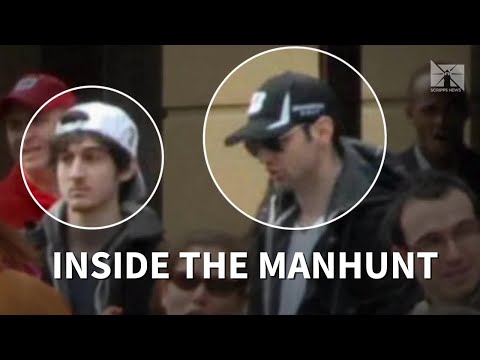
Investigators quickly recovered surveillance and bystander footage, and on April 18 the FBI released images of two suspects. That evening, the brothers were identified, and a violent series of events unfolded. They shot and killed Sean Collier, a 27-year-old Massachusetts Institute of Technology police officer, in his patrol car on the MIT campus, an attack authorities said was an attempt to steal his service weapon.
The brothers then carjacked a vehicle and led police on a chase into Watertown, where a shootout erupted. They threw explosives at officers; Tamerlan was shot and, as Dzhokhar fled in the carjacked vehicle, was run over by his brother, dying of his injuries. A massive manhunt followed, with authorities urging residents across the Boston area to shelter in place. On the evening of April 19, after the order was lifted, a Watertown resident discovered Dzhokhar hiding in a boat stored in his backyard. Dzhokhar, wounded, was taken into custody after a standoff.
Trial and Sentencing
Dzhokhar Tsarnaev was charged with numerous federal offenses, including use of a weapon of mass destruction resulting in death. His federal trial began in early 2015 in Boston. His defense largely conceded his involvement but argued that he had fallen under the influence of his older, dominant brother, who they portrayed as the mastermind.
In April 2015, a jury found Dzhokhar guilty on all 30 counts against him, and the following month the jury recommended the death penalty on several of the capital counts. He was formally sentenced to death in June 2015. In 2020, a federal appeals court vacated the death sentence, citing issues with jury selection, but in March 2022 the U.S. Supreme Court reinstated the death penalty. As of the most recent widely reported developments, Dzhokhar Tsarnaev remained incarcerated while the legal proceedings surrounding his sentence continued.
Aftermath and Legacy
The bombing was the deadliest terrorist attack on U.S. soil since September 11, 2001, and it prompted a major reckoning over homegrown radicalization and the limits of counterterrorism intelligence. Reviews examined whether warnings, including a 2011 tip from Russian authorities about Tamerlan Tsarnaev, had been adequately acted upon by U.S. agencies.
The phrase 'Boston Strong' became a rallying cry symbolizing the city's resilience, and memorials and charitable funds, including the One Fund Boston, were established to support victims and survivors. Many survivors who lost limbs became prominent advocates within the disability and adaptive-sports communities. The attack also influenced security practices at major public events nationwide, with expanded use of surveillance, bag checks, and crowd controls. Several associates of the brothers were later prosecuted for obstruction-related offenses tied to the investigation.