Background
Anis Amri was a Tunisian national born in 1992 in the town of Oueslatia. He arrived in Europe in 2011, reaching the Italian island of Lampedusa amid the migration wave that followed the Arab Spring. In Italy he was convicted of offences including arson and served time in prison before being released. Around 2015 he travelled to Germany and lodged an asylum application, which was ultimately rejected. German authorities sought to deport him, but the process stalled in part because Tunisia delayed providing the documents needed to confirm his identity.
During his time in Germany, Amri came to the attention of security services. He was linked to Islamist networks, associated with a radical preacher, and was monitored at various points by police in several federal states. He used multiple aliases and moved between cities including Berlin and locations in North Rhine-Westphalia. Despite being classified at one stage as a potential threat, surveillance of him was scaled back before the attack, a decision later heavily scrutinised.
The Attack
On the evening of 19 December 2016, Amri hijacked a Scania articulated lorry that had been delivering steel from Italy. The truck's registered driver, Polish national Lukasz Urban, was found shot dead in the cab; investigators concluded Amri had commandeered the vehicle and killed Urban, who was counted among the victims.
At around 8:00 p.m., Amri drove the truck into crowds at the Christmas market at Breitscheidplatz, near the Kaiser Wilhelm Memorial Church in the western part of Berlin. The lorry ploughed through stalls and pedestrians for several dozen metres before coming to a halt. Twelve people were killed, including Urban, and more than 50 others were injured, many seriously. The victims included German citizens and visitors from several other countries. The attack struck during the busy pre-Christmas period and became one of the deadliest extremist attacks in modern German history.
Investigation and Manhunt
In the immediate aftermath, German police initially detained a Pakistani asylum seeker but released him for lack of evidence. Investigators then found identity documents belonging to Amri inside the cab of the truck, which redirected the inquiry and led to a Europe-wide manhunt. Authorities issued a wanted notice and offered a reward for information leading to his capture.
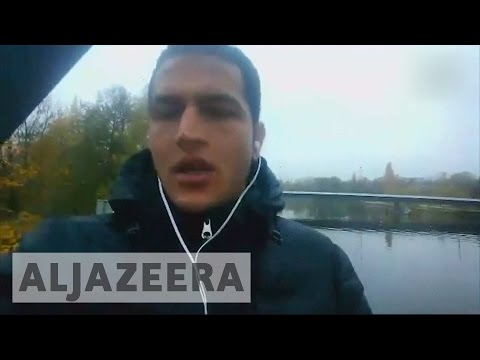
The Islamic State group claimed responsibility for the attack, and a video later emerged in which Amri pledged allegiance to the group's leader. Amri fled Germany, travelling by train through France and into Italy. Investigators subsequently traced his route across European borders, raising questions about how a wanted suspect was able to move so freely in the days following a mass-casualty attack.
Death of the Perpetrator
In the early hours of 23 December 2016, four days after the attack, Amri was stopped during a routine police check near a railway station in Sesto San Giovanni, a town on the outskirts of Milan, Italy. When officers asked for his identification, he drew a firearm and opened fire, wounding one of the two patrolling officers. The other officer, Luca Scata, returned fire and killed Amri at the scene.
Italian and German authorities confirmed his identity through fingerprints. The weapon he used in Milan was later linked by ballistic analysis to the killing of the truck driver Lukasz Urban in Berlin, helping to confirm Amri as the perpetrator of the Breitscheidplatz attack. Because Amri was killed before he could be questioned, important details about possible accomplices and the full planning of the attack remained the subject of ongoing investigation.
Aftermath and Inquiries
The attack prompted intense political and public debate in Germany about failures in immigration enforcement, intelligence sharing, and the surveillance of known extremists. Critics noted that Amri had been on the radar of multiple agencies, had used numerous false identities, and should arguably have been detained or deported before the attack. Several parliamentary committees of inquiry were established at both the federal and state levels to examine how the attack was allowed to happen.
These investigations identified failures and gaps in coordination between police and intelligence bodies, and there were allegations that records may have been altered in one state agency, fuelling further controversy. Berlin's state government later established a compensation and support framework for victims and bereaved families, and a special commissioner was appointed to address their concerns after criticism that survivors had been neglected. A permanent memorial featuring a gold-filled crack running through the steps and a plaque with the victims' names was installed at Breitscheidplatz, and commemorations are held there each year on the anniversary.