Background
On 22 July 2011, Norway suffered the deadliest attack on its soil since the Second World War. The perpetrator, Anders Behring Breivik, was a 32-year-old Norwegian far-right extremist who acted alone. In the years before the attacks he had withdrawn from public life and composed a lengthy compendium expressing anti-Islam, anti-immigration and anti-multicultural views, which he distributed electronically on the day of the attacks.
Breivik's stated motive was opposition to immigration and what he characterized as the 'Islamization' of Europe, combined with hostility toward the governing Norwegian Labour Party, which he blamed for promoting multiculturalism. He deliberately targeted the Labour Party's offices and its youth wing, the Workers' Youth League (AUF), whose annual summer camp was being held on the island of Utoya.
The Attacks
In the afternoon of 22 July 2011, Breivik detonated a vehicle bomb made from fertilizer-based explosives outside government buildings in central Oslo, including the office of the Prime Minister. The explosion killed eight people, injured many others, and caused extensive damage to the government quarter.
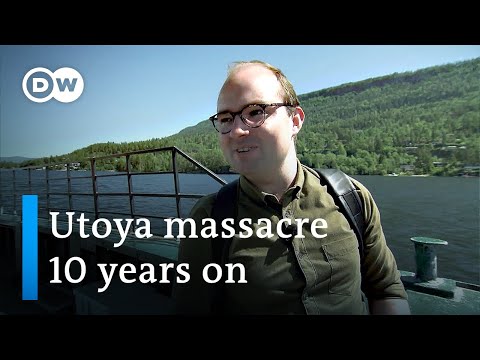
Approximately two hours later, Breivik travelled to Utoya, an island northwest of Oslo where around 600 people were attending the AUF youth camp. Disguised as a police officer and claiming he had come to provide security following the Oslo bombing, he gained access to the island by ferry. He then opened fire on the campers, methodically pursuing victims across the island for more than an hour. Sixty-nine people were killed there, most of them teenagers, and many more were wounded, some while trying to swim to safety. Breivik surrendered without resistance when an armed police unit finally reached the island.
In total, 77 people were killed across the two attacks, making it the deadliest act of violence in Norway since World War II.
Response and Investigation
The emergency response, particularly the time taken for armed police to reach Utoya, drew intense scrutiny. A subsequent independent commission, the 22 July Commission, published a report in 2012 concluding that the Oslo bombing could potentially have been prevented and that the police response to Utoya was too slow and poorly coordinated. The findings prompted significant reforms to Norwegian emergency preparedness and policing.
Because Breivik was apprehended at the scene and openly admitted carrying out both attacks, the investigation focused less on establishing identity than on his planning, his mental state, and whether he had any accomplices. Authorities concluded he had acted alone, despite his own claims of belonging to a wider network.
The Perpetrator and Trial
Breivik's trial opened in Oslo in April 2012. A central question was his criminal sanity. An initial court-appointed psychiatric evaluation diagnosed him with paranoid schizophrenia, which would have rendered him not criminally responsible. The conclusion was widely contested, and a second evaluation found him sane but with personality disorders. The court ultimately ruled that Breivik was legally sane and could be held criminally accountable.
In August 2012 he was convicted of mass murder and terrorism and sentenced to 21 years of preventive detention (forvaring), the maximum then available under Norwegian law. The sentence carries a minimum term and can be extended indefinitely in five-year increments for as long as he is deemed a danger to society, meaning he may never be released.
Breivik did not express remorse and used the proceedings as a platform for his ideology. In 2017 he legally changed his name to Fjotolf Hansen.
Aftermath and Legacy
Norway's national response emphasized openness, democracy and rejection of the hatred behind the attacks. Hundreds of thousands of people participated in memorial gatherings, and then-Prime Minister Jens Stoltenberg called for 'more democracy, more openness' in answer to the violence. Memorials have since been established in Oslo and near Utoya to honour the victims.
The case prompted lasting debate about right-wing extremism, online radicalization, prison conditions and the limits of Norway's humane penal system. Breivik later brought legal complaints alleging that his strict isolation in detention violated his human rights; Norwegian courts and the broader legal process did not result in any easing that altered his fundamental confinement. The attacks remain a defining national trauma and a frequently cited reference point in international discussions of lone-actor terrorism and extremist violence.