Overview
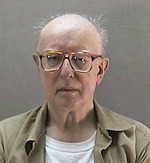
John Emil List (1925-2008) was an American mass murderer who killed his entire immediate family at their home in Westfield, New Jersey, on November 9, 1971. The victims were his mother, Alma; his wife, Helen; and his three children: Patricia (16), John Frederick (15), and Frederick (13). After the killings, List disappeared and successfully evaded capture for nearly 18 years, building a new life under an assumed name. He was finally identified and arrested in 1989 after the case was profiled on the television program America's Most Wanted.
The case became one of the most notorious examples of so-called family annihilation in the United States. It is widely studied for the methodical, premeditated nature of the crime, the killer's stated religious justifications, and the unusual length and success of his flight, which ended only through a combination of televised appeal and forensic facial reconstruction.
Background
John List was born on September 17, 1925, in Bay City, Michigan, the only child of a devout Lutheran family. He served in the U.S. Army during and after World War II, later earned a degree in accounting, and worked in a series of financial and accounting positions. He married Helen Taylor, and the couple eventually settled with their children and List's elderly mother in a large nineteen-room mansion known as Breeze Knoll in Westfield, New Jersey.
By 1971, List was facing severe financial difficulties. He had lost his job, was concealing his unemployment from his family by leaving the house each day as if going to work, and was drawing down funds, including money belonging to his mother. He was also reportedly distressed by what he viewed as his family's drift from his strict religious values. These pressures are commonly cited as the backdrop to the murders, though List framed his motives in religious terms.
The Murders
On the morning of November 9, 1971, List shot his wife, Helen, and his mother, Alma, in the house. He then waited and killed his children individually as they returned home, shooting his daughter Patricia and youngest son Frederick, and later his son John Frederick, who according to accounts struggled and was shot multiple times. List used handguns belonging to the family.
After the killings, List arranged the bodies of his wife and children on sleeping bags in the home's ballroom; his mother's body was left in an upstairs apartment area. He cleaned up, ate, and methodically set his affairs in order. He wrote a lengthy letter to his pastor explaining that he had killed his family to save their souls, expressing the belief that they would go to heaven. He turned on lights, set the radio to a religious station, stopped mail and deliveries, and left the house, allowing weeks to pass before the crime was discovered.
Discovery and Flight
The murders were not discovered until nearly a month later, on December 7, 1971, when concerned neighbors and police entered the darkened house and found the bodies. By then List had a substantial head start. He had abandoned his car at an airport and vanished. Investigators found his confessional letter and the carefully staged scene, but List himself had effectively disappeared.
List relocated to the Midwest and later to Virginia, adopting the name Robert P. Clark. He remarried in 1985, worked again as an accountant, and lived an outwardly ordinary, churchgoing life for years. His new wife was unaware of his past. For almost eighteen years the case remained unsolved, becoming a long-cold mystery that periodically drew renewed public attention.
Capture and Conviction
The breakthrough came on May 21, 1989, when the case was featured on the Fox television program America's Most Wanted. The broadcast included an age-progressed clay bust of List created by forensic artist Frank Bender, depicting how he might look after nearly two decades. Viewers recognized the likeness, and a tip led investigators to Robert Clark in Virginia. He was arrested days later, on June 1, 1989, and fingerprint analysis confirmed that Clark was John List.
List was extradited to New Jersey and tried for the five murders. In 1990 he was convicted on five counts of first-degree murder and sentenced to five consecutive life terms. He never expressed the kind of remorse many expected, maintaining justifications rooted in his account of events. John List died in prison custody in New Jersey on March 21, 2008, at the age of 82.
Legacy
The List case is frequently cited as a landmark example of family annihilation and as one of the most prominent early successes of televised crime appeals. America's Most Wanted highlighted the capture as a signature case, and Frank Bender's age-progression bust became a celebrated example of forensic art aiding a real investigation.
The crime has been the subject of numerous books, documentaries, and a 1993 television film, Judgment Day: The John List Story. The Breeze Knoll mansion itself was destroyed by fire in 1972, before List's capture. The case continues to be referenced in discussions of cold-case investigation, forensic reconstruction, and the psychology of perpetrators who annihilate their own families.