Overview
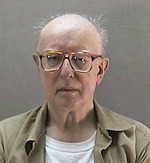
On the night of July 13 into the early morning of July 14, 1966, Richard Speck broke into a townhouse at 2319 East 100th Street in the Jeffery Manor neighborhood on the Southeast Side of Chicago, Illinois. The townhouse served as a dormitory for student nurses affiliated with South Chicago Community Hospital. Over the course of several hours, Speck systematically bound, tortured, and murdered eight young women, most of them student nurses. The crime shocked the United States for its brutality and its scale, and it remains one of the most notorious mass murders in American history.
The killings drew intense national attention, partly because of the number of victims and partly because a single survivor escaped to identify the killer. The case unfolded during a period when several high-profile mass killings entered public consciousness, and it contributed to ongoing debates about violence, the death penalty, and criminal psychology in the late 1960s.
The Crime
Speck, a drifter and merchant seaman who had been seeking work at a nearby union hiring hall, entered the townhouse armed with a knife and a handgun. He gathered the women together, reassured them initially that he only wanted money, and bound them with strips of bedsheet. Over the following hours he removed the victims one at a time to other rooms, where he stabbed and strangled them. The attack was prolonged and methodical, taking place across several rooms of the residence.
One of the women, Corazon Amurao, a nursing exchange student from the Philippines, survived by rolling under a bed and hiding. She remained concealed and silent until she was certain Speck had left, then climbed onto a window ledge and screamed for help in the morning. Her survival proved decisive: she was able to provide a detailed description of the attacker and later identified him.
The Victims
Eight women were killed in the attack. The victims were Gloria Davy, Suzanne Farris, Merlita Gargullo, Mary Ann Jordan, Patricia Matusek, Valentina Pasion, Nina Schmale, and Pamela Wilkening. Several were student nurses living in the dormitory, and they ranged in age in their late teens and early twenties. Mary Ann Jordan was reportedly visiting the townhouse rather than a resident at the time.
The surviving witness, Corazon Amurao, lived through the night by hiding and later became central to the prosecution's case. The victims' deaths were mourned widely, and the tragedy left a lasting mark on the Chicago nursing and hospital community connected to the residence.
Investigation and Arrest
Investigators recovered a key piece of evidence at the scene and from witness accounts: Speck had a distinctive tattoo reading "Born to Raise Hell" on his arm, a detail Amurao described to police. Authorities identified Speck through fingerprints and the union hiring hall connection, and his description was circulated to the public and the press.
Days after the murders, Speck attempted suicide by cutting his wrists in a skid-row hotel. He was taken to Cook County Hospital, where a physician recognized the tattoo and the name from news coverage and alerted police, leading to his identification and arrest. The rapid identification, aided by Amurao's testimony, made the case against him strong.
Trial and Imprisonment
Speck's trial was moved to Peoria, Illinois, because of the extensive pretrial publicity in Chicago. In April 1967 a jury convicted him of the murders, and he was sentenced to death. Corazon Amurao's eyewitness identification was a cornerstone of the prosecution.
The death sentence was not carried out. Following the U.S. Supreme Court's 1972 decision in Furman v. Georgia, which struck down then-existing death penalty statutes, Speck's sentence was overturned. He was resentenced to a lengthy term of imprisonment, commonly reported as hundreds of years in consecutive sentences. Speck remained incarcerated in the Illinois prison system for the rest of his life. He died of a heart attack on December 5, 1991, one day before his 50th birthday.
Aftermath and Legacy
The Speck case became a landmark in American true-crime history and is frequently cited in discussions of mass murder, criminal profiling, and the limits of psychiatric explanation. A widely publicized claim that Speck possessed an extra Y chromosome (the so-called XYY "supermale" theory) circulated for years as a possible explanation for his violence, but this claim was later shown to be false; Speck did not have an XYY karyotype, and the theory has been discredited.
Decades later, a videotape surfaced showing Speck in prison behaving in disturbing ways and boasting about his life behind bars, which renewed public outrage and prompted scrutiny of conditions within the Illinois prison system. The case continues to be the subject of books, documentaries, and retrospective journalism, remembered both for the horror of the crime and for the courage of its sole survivor.