Background
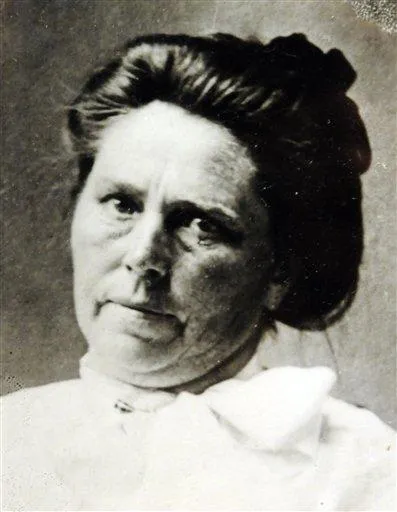
Belle Gunness was born Brynhild Paulsdatter Storset on November 11, 1859, in Selbu, Norway. She emigrated to the United States in 1881, joining her sister in Chicago, Illinois. There she anglicized her name and in 1884 married Mads Ditlev Anton Sorenson. The couple ran a confectionery store that was destroyed by fire, an incident that allowed them to collect insurance money. Several of the children in her household died young, with some deaths attributed to acute illness; in a number of these cases insurance policies were collected.
Mads Sorenson died in 1900, reportedly of heart failure, on a day when two life insurance policies overlapped. Gunness collected the payout and used the funds to purchase a farm on the outskirts of La Porte, Indiana. In 1902 she married Peter Gunness, a Norwegian widower, who died within months under circumstances officially ruled accidental, when a sausage-grinding machine was said to have fallen on his head. Belle again collected insurance money, establishing a pattern that would later draw intense scrutiny.
The Crimes
From her La Porte farm, Gunness placed matrimonial advertisements in Norwegian-language newspapers across the Midwest, seeking suitors of means. The advertisements typically invited well-off bachelors to visit, instructing them to bring cash to demonstrate their seriousness and to help with the mortgage. A succession of men traveled to the farm with their savings and were never seen again. Among the identified victims was Andrew Helgelien of South Dakota, who arrived in early 1908 after extensive correspondence and withdrew a substantial sum from his bank before departing.
Helgelien's brother, Asle Helgelien, grew suspicious when Andrew stopped writing and began making inquiries with Gunness, eventually traveling toward La Porte himself. A farmhand named Ray Lamphere, who had worked for and become entangled with Gunness, was also dismissed and made threats, adding to the tensions surrounding the property. The full number of men lured to the farm has never been firmly established, as records of correspondents were incomplete and many suitors had told relatives little about their destination.
The Fire and Discovery
On April 28, 1908, the Gunness farmhouse burned to the ground. In the ruins, investigators found the bodies of three of Gunness's children and the headless body of an adult woman. The lack of a head complicated identification, and the woman's corpse was reported to be notably smaller than the robust Belle Gunness, raising immediate doubts about whether the remains were truly hers.
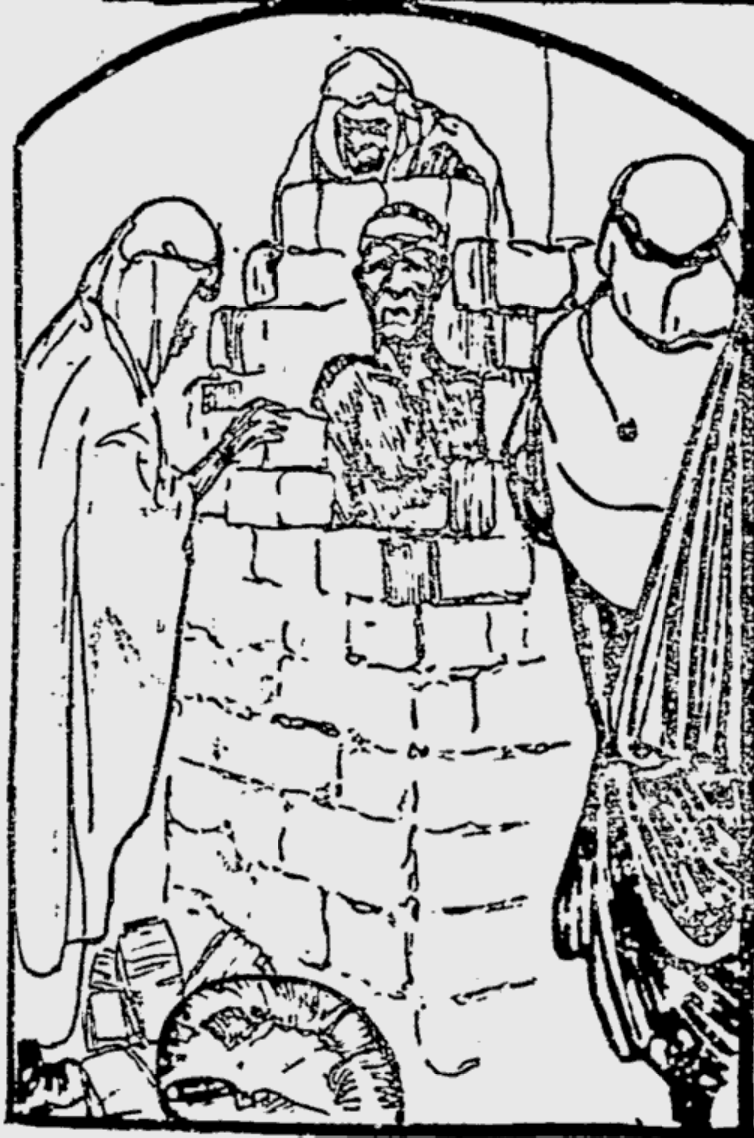
As the search of the property continued, Asle Helgelien urged authorities to dig in the hog lot and garden. Investigators unearthed dismembered human remains in multiple locations, including those identified as Andrew Helgelien. Over the following days and weeks, additional bodies and body parts were recovered from the grounds. Press reports of the time placed the total at well over a dozen, and some accounts cited figures around forty when counting all suspected and unidentified remains. The exact death toll remains uncertain to this day.
The Trial of Ray Lamphere
Ray Lamphere was arrested and charged with murder and arson in connection with the fire. At trial in late 1908, the defense and prosecution clashed over whether the headless female body was actually Belle Gunness. The jury acquitted Lamphere of murder but convicted him of arson. He was sentenced to prison, where he died of tuberculosis in 1909.
Before his death, Lamphere was said to have made statements to a fellow inmate and a clergyman claiming that Gunness had faked her death, murdered a hired woman to serve as a substitute corpse, and fled with her accumulated wealth. These claims, while widely repeated, were never independently verified and rest largely on secondhand accounts. They nonetheless fueled enduring speculation that Gunness escaped justice.
Aftermath and Legacy
The case became a national sensation, and Belle Gunness earned the nickname 'Lady Bluebeard,' after the murderous husband of folklore. For decades, reported sightings of a woman resembling Gunness surfaced across the United States, though none were ever confirmed. The question of whether she died in the fire or staged her own death and disappeared has never been definitively answered.
In 2007 and 2008, researchers exhumed the body buried as Belle Gunness in an attempt to confirm her identity through DNA analysis. The effort to obtain a conclusive result was reported to have been hampered by degraded samples, and the findings did not produce a universally accepted resolution. The case remains officially unresolved. Belle Gunness is widely regarded as one of America's most prolific suspected female serial killers, and the precise number of her victims, along with her ultimate fate, continue to be debated by historians and crime researchers.