The Murders in Robin Hood Hills
On May 5, 1993, three eight-year-old boys disappeared in West Memphis, Arkansas, after riding their bicycles in their neighborhood. The victims were Stevie Branch, Michael Moore, and Christopher Byers, all second-grade classmates. After a search involving police and community volunteers, their bodies were discovered the following day, May 6, in a drainage ditch in a wooded area known locally as Robin Hood Hills.
The boys had been stripped naked, and their wrists were bound to their ankles using their own shoelaces. The bodies had been submerged in the water-filled ditch. The brutal nature of the crime, involving young children, generated intense fear and grief in the community and drew immediate, sustained local and national attention.
The case unfolded in a climate in which rumors of satanic or occult ritual activity circulated widely. These claims, later heavily disputed, would shape the direction of the police investigation and the prosecution's eventual theory of the crime.
Investigation and Misskelley's Confession
Suspicion soon focused on three local teenagers: Damien Echols, then 18; Jason Baldwin, 16; and Jessie Misskelley Jr., 17. Echols in particular drew attention because he wore black clothing, listened to heavy metal music, and had an interest in the occult and Wicca, which some in the investigation linked to the theory that the killings were a satanic ritual.
The central piece of evidence against the three was a confession given by Misskelley, who has been described as having a low IQ. He was questioned by police for hours, and only a small portion of the interrogation was recorded. His statement contained significant inconsistencies with the known facts of the crime, including errors about the time of day and details of how the boys died.
Misskelley later recanted his confession, and critics argued it was coerced and unreliable, a product of a suggestive interrogation of a vulnerable juvenile. Because the confession was legally not admissible against his co-defendants, it could not be used directly in the separate trial of Echols and Baldwin.
The Trials and Convictions
Misskelley was tried separately in early 1994 and convicted of one count of first-degree murder and two counts of second-degree murder. He was sentenced to life in prison plus 40 years.
Echols and Baldwin were tried together. The prosecution presented the case as a satanic ritual killing, introducing testimony about Echols's interest in the occult and presenting fiber and other circumstantial evidence. There was no physical or forensic evidence definitively linking the three teenagers to the crime scene. The case relied heavily on the satanic-panic narrative and witness testimony, some of which was later challenged.
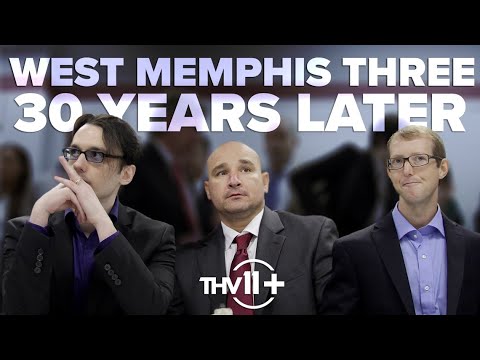
Echols and Baldwin were convicted in March 1994. Baldwin received a sentence of life imprisonment. Echols, portrayed as the ringleader, was sentenced to death. The three became known collectively as the West Memphis Three.
Doubts, Media, and the Movement for Release
In the years after the convictions, the case attracted widespread skepticism and a large support movement. The HBO documentary series 'Paradise Lost,' beginning with 'Paradise Lost: The Child Murders at Robin Hood Hills' (1996), brought national attention to perceived flaws in the investigation and trials.
Supporters, including prominent musicians and celebrities such as Eddie Vedder, Henry Rollins, Johnny Depp, and Peter Jackson, raised funds for legal defense and new investigation. Critics of the convictions pointed to the coerced nature of Misskelley's confession, the absence of physical evidence, and the reliance on the satanic-panic theory.
Later DNA testing of evidence from the crime scene did not match any of the three convicted men. Questions were also raised about possible alternative suspects, though no other person has been convicted of the crime. The defense argued that the new forensic findings undermined the original cases.
The Alford Plea and Release in 2011
In 2011, after new DNA evidence and ongoing legal challenges, the Arkansas courts moved toward potential new hearings. On August 19, 2011, the three men entered Alford pleas. An Alford plea allows a defendant to maintain their innocence while acknowledging that prosecutors have enough evidence to likely secure a conviction.
Under the arrangement, the men pleaded guilty to lesser charges while asserting their innocence, were sentenced to time served (approximately 18 years already spent in prison), and were released. Echols was freed from death row as part of the deal.
The Alford plea is legally significant: in the eyes of the law, the three remain technically convicted and were not formally exonerated. Damien Echols, Jason Baldwin, and Jessie Misskelley Jr. have consistently maintained their innocence, and the case is widely regarded by journalists, advocates, and much of the public as a wrongful conviction. The murders of Stevie Branch, Michael Moore, and Christopher Byers have never been otherwise solved.
Legacy
The West Memphis Three case became one of the most prominent examples cited in discussions of wrongful convictions, coerced confessions, and the dangers of moral panic. The 'satanic panic' framing of the original prosecution has been widely criticized in retrospect.
The case inspired multiple documentaries, including the three-part 'Paradise Lost' series and 'West of Memphis' (2012), produced by Peter Jackson and Fran Walsh, as well as books and a dramatic film, 'Devil's Knot' (2013). The men have since spoken publicly and written about their experiences.
Because the men accepted Alford pleas rather than being formally exonerated, their legal status remains a point of nuance: convicted in the record, but released and widely believed to be innocent. The families of the victims have expressed divided views over the years about the guilt of the three and the unresolved nature of the case.