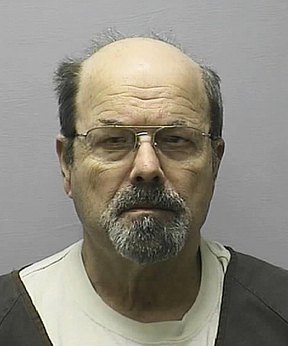
Background and Early Life
Jeffrey Lionel Dahmer was born on May 21, 1960, in Milwaukee, Wisconsin, and grew up primarily in Bath Township, Ohio. Acquaintances and later accounts described him as a withdrawn child who developed an early fixation on dead animals, collecting and dissecting roadkill. His parents' marriage was troubled and ended in divorce during his adolescence, a period in which his isolation and heavy drinking reportedly increased.
Dahmer graduated from high school in 1978 and briefly attended Ohio State University before dropping out. He enlisted in the U.S. Army in early 1979 and served as a medic in Germany, but was discharged in 1981 due to alcohol abuse. He eventually settled in the Milwaukee area, where he lived for periods with his grandmother before moving into his own apartment. He committed his first murder in 1978, at the age of 18, then did not kill again for roughly nine years.
The Crimes
Between 1978 and 1991, Dahmer murdered 17 men and boys, most of them young Black, Asian, and Latino men he met at bars, malls, and bus stops in the Milwaukee area. His first victim was Steven Hicks, a hitchhiker killed in Ohio in 1978. After a long gap, his killings resumed in 1987 and accelerated dramatically in 1990 and 1991, with several murders occurring in a span of months.
Dahmer typically lured victims to his residence with offers of money, alcohol, or photographs, then drugged them with sedatives before strangling them. His crimes involved dismemberment, necrophilia, and acts of cannibalism. He attempted to create what he described as compliant companions through crude and fatal procedures, and he preserved body parts, including skulls, as keepsakes. Many of his later murders were committed in his apartment in the Oxford Apartments complex on Milwaukee's near west side.
Investigation and Arrest
Dahmer was apprehended on July 22, 1991, after one of his intended victims, Tracy Edwards, escaped from his apartment with a handcuff still on his wrist and flagged down Milwaukee police. Officers accompanied Edwards back to the apartment, where they discovered photographs of dismembered bodies and, upon further search, human remains including severed heads, preserved body parts, and other evidence.
One earlier incident drew lasting controversy: in May 1991, a 14-year-old victim, Konerak Sinthasomphone, was returned to Dahmer by police after escaping, despite the concerns of neighbors. Dahmer convinced officers the situation was a domestic dispute between adults, and the boy was killed shortly afterward. The handling of that case prompted significant criticism of the Milwaukee Police Department. After his arrest, Dahmer confessed in detail to the killings during lengthy interrogations.
Trial and Outcome
Dahmer was charged with multiple counts of murder in Wisconsin. He initially pleaded not guilty by reason of insanity, and his 1992 trial focused on whether he was legally sane and able to control his actions at the time of the crimes. In February 1992, a jury found him sane and guilty on 15 counts of murder. He was sentenced to 15 consecutive life terms, totaling more than 900 years in prison; Wisconsin did not have the death penalty.
He was later returned to Ohio, where he pleaded guilty to the 1978 murder of Steven Hicks and received an additional life sentence. Dahmer was incarcerated at the Columbia Correctional Institution in Portage, Wisconsin. He reportedly expressed remorse in court and cooperated with authorities in identifying his victims.
Death, Aftermath, and Legacy
On November 28, 1994, Dahmer was beaten to death by a fellow inmate, Christopher Scarver, while on a work detail at the Columbia Correctional Institution. Another inmate was attacked in the same incident. Dahmer was 34 years old. Scarver was convicted and given additional life sentences.
The case had a profound impact on Milwaukee and on national discussions of policing and justice. The failure to protect Konerak Sinthasomphone fueled criticism that the police had not taken seriously the concerns of victims and witnesses, many of whom were people of color or LGBT. Families of the victims pursued civil claims, and the Oxford Apartments building was later demolished. Dahmer's crimes have been the subject of extensive books, documentaries, and dramatizations, and his name remains widely associated with one of the most notorious series of murders in American history. Such media portrayals have at times drawn objections from victims' families.