Background and Early Life
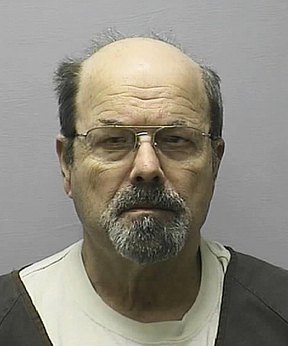
Dennis Lynn Rader was born on March 9, 1945, in Pittsburg, Kansas, and grew up in Wichita, the eldest of four sons in a working-class family. He served in the United States Air Force from 1966 to 1970, then returned to Kansas, married Paula Dietz in 1971, and the couple had two children. Rader earned an associate degree in electronics and later a bachelor's degree in administration of justice from Wichita State University.
To those around him, Rader appeared to be an ordinary and even upstanding member of his community. He worked for a time at the home-security company ADT, and from 1991 to 2005 he served as a compliance officer for the city of Park City, a suburb of Wichita, enforcing local ordinances. He was an active member of Christ Lutheran Church, where he was elected president of the congregation council, and he was a Cub Scout leader. This respectable public life concealed a series of murders he committed over decades.
The Crimes
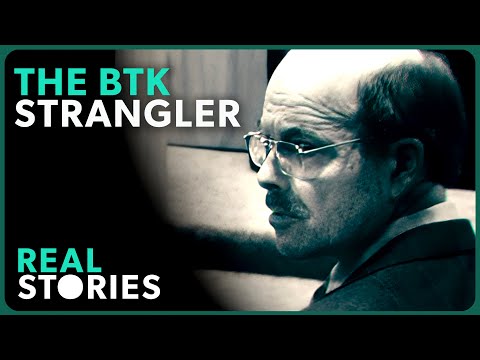
Rader called himself "BTK," an acronym he chose to stand for "Bind, Torture, Kill," describing his method. His first known killings occurred on January 15, 1974, when he murdered four members of the Otero family in their Wichita home: Joseph Otero, his wife Julie, and two of their children, Josephine, age 11, and Joseph II, age 9. Over the following years he killed additional victims, including Kathryn Bright in 1974, Shirley Vian in 1977, and Nancy Fox in 1977.
His later known victims were Marine Hedge in 1985, Vicki Wegerle in 1986, and Dolores Davis in 1991. In total, Rader was responsible for ten murders between 1974 and 1991. He typically stalked victims he referred to as "projects," entered homes, and strangled them. A defining feature of the case was that Rader sought attention for his crimes, sending letters and packages to police and local news media in which he took credit for the killings and provided details only the perpetrator would know.
Investigation and Arrest
The BTK case went unsolved for decades and became one of the most notorious cold cases in American criminal history. After communicating with media and police in the 1970s, Rader fell silent for many years. In 2004, apparently prompted in part by news coverage marking the 30th anniversary of the Otero murders, he resumed sending communications, mailing letters, puzzles, and packages that reignited the investigation.
Rader's renewed contact ultimately led to his capture. He asked police, via a message, whether a floppy disk could be traced back to him; investigators indicated it could not, and Rader then sent a floppy disk. Forensic examination of metadata on the disk pointed to a computer at his church and to a user named "Dennis," leading detectives to Rader. Investigators corroborated the lead with DNA evidence connecting Rader to the crimes. He was arrested on February 25, 2005, in Park City, Kansas.
Trial and Outcome
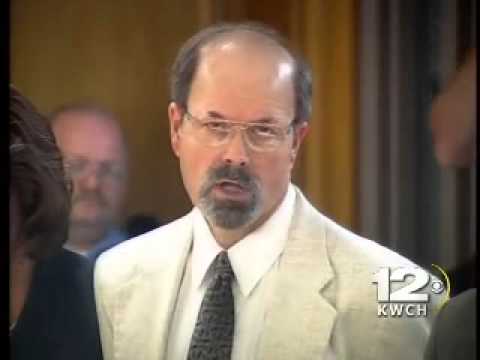
Following his arrest, Rader was charged with ten counts of first-degree murder. On June 27, 2005, he pleaded guilty to all ten counts, and in a lengthy and chilling court statement he described his crimes in detailed, methodical fashion, recounting how he selected and killed his victims. The proceeding drew national attention because of his calm, matter-of-fact demeanor.
Because Kansas did not have a death penalty statute in force applicable to the time periods of his crimes, Rader could not be sentenced to death. On August 18, 2005, he was sentenced to ten consecutive life sentences, amounting to a minimum of 175 years in prison without the possibility of parole. He has remained incarcerated in Kansas, serving his sentence at the El Dorado Correctional Facility.
Aftermath and Legacy
The BTK case had a profound impact on the Wichita community and on the families of the victims, who endured decades of fear and uncertainty before the killer was identified. The revelation that the perpetrator was a churchgoing family man, civil servant, and Scout leader shocked the public and underscored how a serial offender could conceal a double life within an ordinary community.
The case has been the subject of extensive books, documentaries, and dramatizations and is frequently cited in discussions of forensic investigation, particularly the role of digital metadata in solving the case. Rader's own communications and his decision to resume contact with authorities are often examined as examples of an offender's compulsion for recognition contributing to his capture. The BTK murders remain among the most studied serial killer cases in the United States.