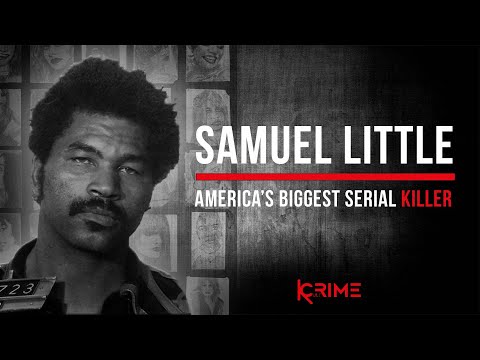
Samuel Little (born Samuel McDowell, June 7, 1940, in Reynolds, Georgia) was an American serial killer and former boxer who confessed to murdering 93 people between 1970 and 2005. The FBI confirmed approximately 50 of his confessions, making him the most prolific serial killer in U.S. history. He typically targeted vulnerable women, often sex workers or addicts, strangling them while traveling across the country. He died in custody on December 30, 2020.
Known Victims
At least 93 total — known victims include:
Carol Alford (41)
Audrey Nelson (35)
Guadalupe Apodaca (46)
Denise Christie Brothers (38)
Melissa Thomas (24)
Location
Los Angeles, USA
Summary
Samuel Little, later confirmed as the most prolific serial killer in U.S. history, was arrested in 2012 and ultimately confessed to 93 murders spanning decades across the country.
Details
Samuel Little was arrested in September 2012 at a homeless shelter in Louisville, Kentucky, and extradited to California. DNA evidence linked him to the strangulation deaths of three women in Los Angeles County, and in 2014 he was convicted of three counts of first-degree murder and sentenced to life without parole. Beginning in 2018, Little confessed to 93 killings across at least 19 states between 1970 and 2005; the FBI verified roughly 50 of them. Many victims were marginalized women whose deaths had gone unsolved or were misclassified as accidental or undetermined.
Overview
Samuel Little (June 7, 1940 – December 30, 2020) was an American serial killer who is regarded as the most prolific in United States history. Although he was convicted in court of a smaller number of killings, the Federal Bureau of Investigation (FBI) ultimately confirmed his connection to dozens of murders and announced that it considered all 93 of his confessions to be credible. His crimes spanned multiple decades, beginning in the 1970s, and stretched across numerous states from coast to coast.
Little evaded justice for an extraordinarily long period in part because of the manner in which he selected victims and disposed of bodies. Many of his killings were originally classified as overdoses, accidental deaths, or were left undetermined, and a number of his victims were never identified. His case is frequently cited as an example of how marginalized victims can fall through the gaps of the criminal justice system.
Method and Victim Profile
According to investigators and Little's own statements, the majority of his victims were vulnerable women, many of whom were involved in sex work, struggling with addiction, or otherwise living on the margins of society. He often targeted people whose disappearances were less likely to be reported or aggressively investigated.
Little frequently strangled his victims. Because strangulation does not always leave the obvious trauma associated with other methods, and because some bodies showed no clear signs of homicide, many deaths were not initially treated as murders. This pattern, combined with his transient lifestyle and movement between jurisdictions, allowed the killings to go unconnected for years. A former boxer, Little reportedly used his physical strength to overpower victims.
Arrest and Conviction
Samuel Little had a long criminal record across many states dating back decades, but he repeatedly avoided lasting consequences for the most serious offenses. He was arrested in 2012 at a homeless shelter in Kentucky and extradited to California in connection with a drug offense.
Once in custody, DNA evidence linked Little to the deaths of three women in the Los Angeles area whose killings dated to the 1980s. In 2014, he was convicted of three counts of murder and sentenced to multiple terms of life imprisonment without the possibility of parole. These convictions formed the legal foundation that kept him incarcerated as investigators continued to probe his broader history.
Confessions and the FBI Investigation
After his conviction, Little eventually began confessing to a far larger number of killings. Beginning around 2018, a Texas Ranger and FBI analysts worked to interview him at length, and over time he provided detailed accounts of dozens of murders committed across the country over several decades.
In total, Little confessed to 93 murders. The FBI publicly stated that it had confirmed many of these confessions and that it considered all of them to be credible, making him the most prolific serial killer in U.S. history by confirmed and confessed counts. Little had an unusually strong memory for details about his victims and the circumstances of the crimes, even when he could not always recall exact dates or locations.
Identifying the Victims
A distinctive feature of the Samuel Little investigation was its public-facing effort to identify unknown victims. Little produced numerous color drawings depicting women he said he had killed, recalling their faces, hairstyles, and other features. The FBI released these portraits along with biographical details he provided in an appeal for public assistance.
The goal of releasing this material was to match Little's confessions to unsolved cases and unidentified remains, and to help families learn the fate of missing loved ones. Authorities matched a number of the confessions to specific cold cases, though some of the killings he described remained unverified or involved victims who had not been identified, leaving the full accounting of his crimes incomplete.
Death and Legacy
Samuel Little died on December 30, 2020, at the age of 80, while in custody in California. His death was reported as resulting from natural or health-related causes, and at the time he was still being studied by investigators seeking to close additional cold cases.
The case had a lasting impact on how law enforcement approaches serial homicide, cold cases, and the deaths of marginalized people. It underscored the value of cross-jurisdictional data sharing and DNA databases, and prompted renewed scrutiny of deaths that had been dismissed as non-criminal. The FBI continued to seek public help matching Little's confessions to unsolved cases even after his death.
Video Coverage
Frequently asked questions
What was the Samuel Little Serial Murders case?
Samuel Little, later confirmed as the most prolific serial killer in U.S. history, was arrested in 2012 and ultimately confessed to 93 murders spanning decades across the country.
Who was responsible for Samuel Little Serial Murders?
Samuel Little. Samuel Little (born Samuel McDowell, June 7, 1940, in Reynolds, Georgia) was an American serial killer and former boxer who confessed to murdering 93 people between 1970 and 2005. The FBI confirmed approximately 50 of his confessions, making him the most prolific serial killer in U.S. history. He typically targeted vulnerable women, often sex workers or addicts, strangling them while traveling across the country. He died in custody on December 30, 2020.
How many victims were there in the Samuel Little Serial Murders case?
At least 93 victims are associated with this case, including named victims such as Carol Alford, Audrey Nelson, Guadalupe Apodaca.
Where and when did the Samuel Little Serial Murders case take place?