The Bombing
On the afternoon of 12 December 1969, a bomb exploded inside the Banca Nazionale dell'Agricoltura on Piazza Fontana in central Milan, Italy. The device detonated at around 4:30 p.m., when the bank was crowded with farmers and agricultural workers who had come to the city for market day. The blast killed 17 people and wounded approximately 88 others, making it one of the deadliest acts of political violence in postwar Italy.
On the same day, additional explosive devices were planted in Rome and Milan. Two bombs detonated in Rome, injuring several people, and a further unexploded device was found at the Banca Commerciale Italiana in Milan's Piazza della Scala. The coordinated nature of the attacks indicated organized planning rather than an isolated act, and the Milan explosion came to symbolize the broader campaign of bombings.
The 'Strategy of Tension'
The Piazza Fontana bombing is widely regarded as the opening event of what became known in Italy as the 'anni di piombo' (the Years of Lead) and is associated with the so-called 'strategia della tensione' (strategy of tension). According to this interpretation, attacks were carried out to spread fear and destabilize the country, in the hope of justifying authoritarian or reactionary political responses and discrediting the left.
The bombing took place against a backdrop of intense social unrest, including the 'Hot Autumn' of 1969 marked by widespread strikes and student protest. The attack heightened political tensions and shaped Italian public debate for decades, becoming a reference point in discussions of political terrorism, the role of state institutions, and the period's unresolved violence.
Investigation and the Anarchist Lead
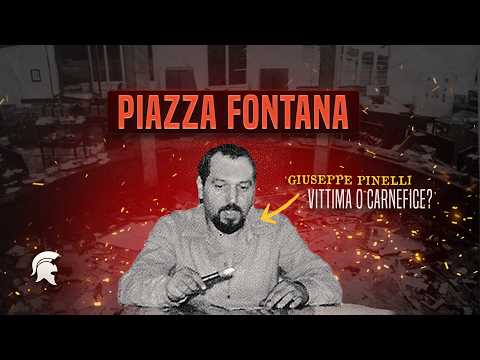
In the immediate aftermath, investigators focused on anarchist and left-wing circles. Among those arrested were the anarchist railway worker Giuseppe Pinelli and the dancer Pietro Valpreda. Pinelli died on 15 December 1969 after falling from a window of the Milan police headquarters during interrogation; the circumstances of his death became highly controversial and a lasting subject of dispute.
Valpreda was initially charged and spent years awaiting trial before eventually being acquitted. Over time, the early focus on anarchists was widely criticized, and the investigation shifted toward neo-fascist groups. The handling of the case, including the death of Pinelli, fueled enduring suspicion about official conduct and inspired works of art, theatre, and journalism examining the events.
The Neo-Fascist Trail
Investigations increasingly pointed toward militants of the neo-fascist organization Ordine Nuovo. The principal accused became Franco Freda, a Padua-based publisher, and Giovanni Ventura. They were prosecuted in connection with the bombing across a long series of trials, during which the attribution of responsibility shifted repeatedly between different jurisdictions and defendants.
The judicial history of the case was extraordinarily protracted, spanning decades and multiple trials in different cities. Successive verdicts produced convictions, acquittals, and annulments. Allegations also emerged regarding possible involvement or cover-up by elements within Italian security and intelligence services, claims that were extensively debated but difficult to establish definitively in court.
Final Judicial Outcomes
After decades of litigation, Italian courts ultimately attributed the Piazza Fontana bombing to a neo-fascist cell linked to Ordine Nuovo, identifying Franco Freda and Giovanni Ventura as among those responsible. However, because they had been definitively acquitted in earlier proceedings, the principle of double jeopardy meant they could not be punished again for the attack despite this later attribution.
In 2005, Italy's Court of Cassation issued a ruling that, while confirming the responsibility of the Ordine Nuovo group, brought the principal criminal proceedings to a close without new convictions of the main historic defendants. The outcome left a sense among many in Italy that, although the political and organizational origins of the attack had been established, full legal accountability had not been achieved.
Legacy
The Piazza Fontana bombing remains a defining trauma in modern Italian memory and a symbol of the unresolved violence of the Years of Lead. Annual commemorations are held in Milan, and a memorial marks the site. The case has been the subject of extensive literature, films, and historical study, including reflection on the death of Giuseppe Pinelli.
The bombing's long and contested judicial aftermath made it emblematic of difficulties in prosecuting politically motivated terrorism in Italy. While courts eventually located responsibility within neo-fascist circles connected to Ordine Nuovo, the absence of enforceable convictions of the central figures, and persistent questions about state involvement, have kept the case a focus of historical and political debate.