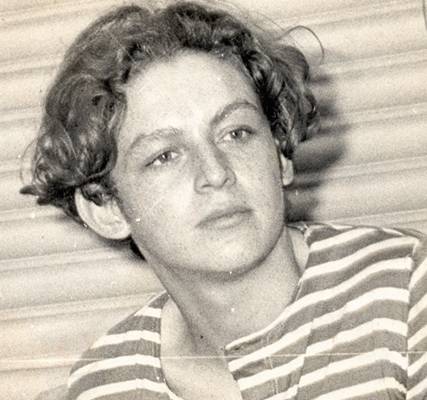
Maria de las Mercedes Bolla de Murano ("Yiya" Murano)
Yiya Murano (1930-2014) was an Argentine housewife and swindler from the Monserrat neighborhood of Buenos Aires. An avid reader of Agatha Christie novels, she ran an informal money-lending scheme and accumulated debts she could not repay. She poisoned three women in her social circle with cyanide hidden in tea and pastries to avoid repaying them. Initially acquitted, she was sentenced to life imprisonment in 1985.
Victims
Nilda Adelina Gamba
Lelia "Chicha" Formisano de Ayala
Carmen Zulema "Mema" del Giorgio de Venturini
Location
Monserrat neighborhood, Buenos Aires, Argentina
Summary
Argentine housewife Yiya Murano poisoned three women from her social circle with cyanide-laced tea and pastries in 1979 Buenos Aires to escape debts she owed them.
Details
Between February and March 1979, Yiya Murano killed three women she knew in the Monserrat district of Buenos Aires: neighbor Nilda Gamba, family friend Lelia "Chicha" Formisano de Ayala, and her second cousin Carmen "Mema" del Giorgio. She invited each to share tea and pastries laced with cyanide, eliminating creditors to whom she owed money from a failed lending scheme. Arrested in April 1979, she was acquitted in the early 1980s for lack of direct evidence, but in June 1985 an appeals court overturned the acquittal and sentenced her to life imprisonment. She served 16 years and died in 2014.
Overview
Maria de las Mercedes Bolla Aponte de Murano, known popularly as "Yiya" Murano, was an Argentine housewife who became one of the country's most infamous convicted murderers. In 1979, in Buenos Aires, she poisoned three women from her own social circle using cyanide, hidden in tea, pastries, and other treats she offered them. The case shocked Argentine society both for the cold, premeditated nature of the killings and for the seemingly ordinary, middle-class profile of the perpetrator. Murano became widely known in the press by nicknames such as "la envenenadora de Monserrat" (the poisoner of Monserrat), referencing the central Buenos Aires neighborhood associated with the case.
The Murders
The three victims were women Murano knew personally and to whom she reportedly owed money. According to the case as widely reported, Murano had borrowed substantial sums and faced mounting debts she was unable to repay. Investigators and the press concluded that she chose to eliminate her creditors rather than settle the debts.
The victims died within a relatively short span in 1979. Each had accepted food or drink from Murano shortly before falling ill and dying, a pattern that initially raised little suspicion because the deaths appeared, at first, to be the result of natural causes or sudden illness. The poison used was cyanide, a fast-acting toxin that can produce death within minutes to hours of ingestion. The recurrence of sudden deaths among women connected to the same individual eventually drew the attention of authorities.
Investigation and Arrest
Suspicion grew as the cluster of deaths among Murano's acquaintances became difficult to explain as coincidence. Forensic examination and toxicological analysis pointed to poisoning, and the common link between the victims was their personal and financial relationship with Murano. She was arrested in 1979 as the prime suspect.
The investigation reconstructed how Murano had administered the poison through food and drink offered in social settings, exploiting the trust of her victims. The financial motive, debts owed to the deceased women, became the central explanation for the crimes presented by investigators and prosecutors. The case attracted intense media coverage in Argentina, where Murano's calm public demeanor and denials became a recurring feature of the reporting.
Trial and Conviction
Yiya Murano was prosecuted for the murders and ultimately convicted. The case became a landmark in Argentine criminal history, frequently cited as one of the country's most notorious instances of a female serial poisoner. Throughout the proceedings and for years afterward, Murano maintained her innocence, a stance she reportedly held publicly even after her conviction.
She was sentenced to a lengthy prison term. Over the following years her case remained a subject of public fascination, periodically revisited by Argentine journalists and writers. After serving time in prison, she was eventually released. Details of the exact sentence length and the precise chronology of her incarceration and release are reported with some variation across sources, and readers should treat specific figures with caution.
Legacy and Cultural Impact
The Yiya Murano case left a lasting imprint on Argentine popular culture and true-crime memory. Her nickname as a poisoner entered common reference, and the case has been revisited in books, articles, television programs, and dramatizations over the decades. It is often discussed alongside broader fascination with female poisoners and with crimes committed within ostensibly respectable middle-class settings.
Murano lived for many years after her release and remained a recognizable public figure in Argentina, occasionally appearing in or being referenced by media until her death. The case continues to be cited in Argentine discussions of crime, justice, and the way ordinary domestic life can mask premeditated violence. Its enduring notoriety rests on the combination of an intimate betrayal of friends and the methodical use of poison disguised within everyday hospitality.
Video Coverage
Frequently asked questions
What was the Yiya Murano - The Poisoner of Monserrat case?
Argentine housewife Yiya Murano poisoned three women from her social circle with cyanide-laced tea and pastries in 1979 Buenos Aires to escape debts she owed them.
Who was responsible for Yiya Murano - The Poisoner of Monserrat?
Maria de las Mercedes Bolla de Murano ("Yiya" Murano). Yiya Murano (1930-2014) was an Argentine housewife and swindler from the Monserrat neighborhood of Buenos Aires. An avid reader of Agatha Christie novels, she ran an informal money-lending scheme and accumulated debts she could not repay. She poisoned three women in her social circle with cyanide hidden in tea and pastries to avoid repaying them. Initially acquitted, she was sentenced to life imprisonment in 1985.
Who were the victims of the Yiya Murano - The Poisoner of Monserrat case?
The named victims were Nilda Adelina Gamba, Lelia "Chicha" Formisano de Ayala, Carmen Zulema "Mema" del Giorgio de Venturini.
Where and when did the Yiya Murano - The Poisoner of Monserrat case take place?
It took place in Buenos Aires, Argentina in 1979.
Was the Yiya Murano - The Poisoner of Monserrat case solved?