Overview
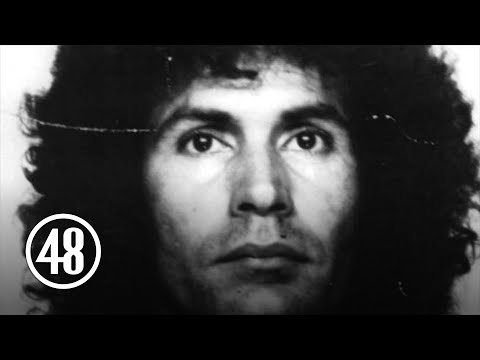
Rodney James Alcala (born Rodrigo Jacques Alcala-Buquor, August 23, 1943 - July 24, 2021) was an American serial killer and convicted sex offender. He was sentenced to death in California in 2010 for the murders of four women and a 12-year-old girl committed between 1977 and 1979, and later pleaded guilty in 2013 to two additional murders in New York. He became widely known as the "Dating Game Killer" because, in 1978, while already a registered sex offender and in the midst of his killing spree, he appeared as a contestant and won a date on the popular television show The Dating Game.
Alcala was a skilled photographer who used his camera to approach and gain the trust of young women and girls. Authorities long suspected his confirmed victim count understated the true total. The exact number of his victims has never been definitively established, and estimates have ranged into the dozens. His case drew renewed national attention in 2010 when police released hundreds of his photographs of unidentified women and children in an effort to identify possible additional victims.
Early Crimes and Pattern
Alcala served in the U.S. Army in the 1960s before being discharged. He later studied at the University of California, Los Angeles and reportedly attended the New York University film school, where he studied under filmmaker Roman Polanski.
His documented criminal history began in 1968, when he lured an eight-year-old girl, Tali Shapiro, to his Los Angeles apartment and assaulted her. A witness alerted police, who found the girl gravely injured; she survived. Alcala fled to the East Coast and lived under aliases. He was eventually apprehended and convicted, but served only a portion of his sentence before being paroled, a pattern of early release that would recur. He was again arrested in the 1970s on charges involving a minor. These convictions made him a registered sex offender even as he continued to evade accountability for more serious crimes.
The Dating Game Appearance
In September 1978, Alcala appeared as "Bachelor Number One" on an episode of ABC's The Dating Game. At the time he was a paroled sex offender and, according to later prosecutions, had already killed. He won the date with the show's female contestant, but she reportedly declined to go out with him afterward, later saying she found him unsettling.
His television appearance became a defining and macabre detail of his case, lending him the enduring nickname the "Dating Game Killer." The episode has been cited in numerous documentaries and a dramatized 2017 film. The appearance illustrated how Alcala presented a charming, articulate public persona that masked his crimes, and how gaps in the criminal justice system of the era allowed a known offender to circulate freely.
California Murders and Convictions
Alcala was first tried for the 1979 murder of 12-year-old Robin Samsoe, who disappeared while riding a bicycle to a ballet class in Huntington Beach, California. Her remains were found in the foothills of the Sierra Madre Mountains. Alcala was convicted and sentenced to death in 1980, but the conviction was overturned on appeal. A 1986 retrial also ended in a conviction that was later reversed.
In 2010, Alcala faced a third trial, this time for the murders of Samsoe and four young women: Jill Barcomb (1977), Georgia Wixted (1977), Charlotte Lamb (1978), and Jill Parenteau (1979). DNA and forensic evidence linked him to the additional victims. Alcala represented himself at trial, questioning witnesses and even playing the role of both attorney and defendant in his own cross-examination. He was convicted on all counts and again sentenced to death.
New York Charges and the Photographs
After the 2010 California verdict, authorities in New York charged Alcala with two additional murders: Cornelia Crilley, a flight attendant killed in 1971, and Ellen Hover, killed in 1977. In December 2012, he was extradited to New York, and in 2013 he pleaded guilty to both killings and was sentenced to additional prison time.
During the 2010 proceedings, investigators released more than 100 of the hundreds of photographs found in a Seattle storage locker Alcala had rented, depicting women, teenagers, and children, many of whom were never identified. Police sought the public's help to determine whether any subjects had been victims or could identify themselves as survivors. Some individuals were located safe, but many photographs remained unidentified, fueling belief that Alcala's true victim count was far higher than the cases proven in court.
Death and Legacy
Alcala remained on California's death row at the time of his death. He died of natural causes on July 24, 2021, at a hospital near Corcoran State Prison, at age 77. He was never executed; California had a moratorium on executions in place.
Alcala's case remains a touchstone in discussions of serial-offender psychology, the failures of parole and sentencing systems in the 1960s and 1970s, and the use of media imagery in criminal investigations. The unresolved photographs and suspected uncharged murders mean the full scope of his crimes is unknown. He has been the subject of extensive documentary and dramatic treatments, and his Dating Game appearance endures as one of the most chilling intersections of popular entertainment and violent crime in American history. Investigators in multiple jurisdictions have continued to examine cold cases for possible links to him.