Overview
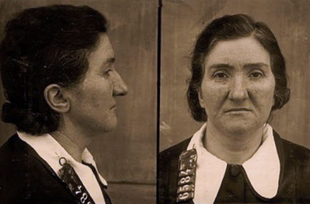
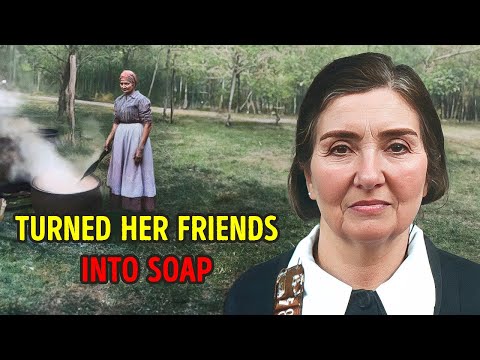
Leonarda Cianciulli (1894-1970) was an Italian serial killer who murdered three women in the town of Correggio, in the Emilia-Romagna region of northern Italy, between 1939 and 1940. She became one of the most infamous figures in Italian criminal history, popularly nicknamed "la Saponificatrice di Correggio" (the Soap-Maker of Correggio) because she disposed of her victims' bodies by transforming them into soap. She also reportedly used remains to make teacakes that she served to guests. Her crimes were rooted in superstition and a desperate maternal belief that human sacrifice could protect her favorite son.
Cianciulli's case attracted enormous public attention both for the gruesome nature of the killings and for the disturbingly calm, detailed confession she gave to investigators. Her story has since been retold in books, documentaries, and museum exhibitions, and remains one of the best-known cases of female serial murder in twentieth-century Europe.
Early Life and Background
Leonarda Cianciulli was born on 18 April 1894 in Montella, in the Avellino province of the Campania region of southern Italy. Accounts of her early life describe an unhappy childhood; she is said to have attempted suicide as a young woman. In 1917 she married Raffaele Pansardi, a registry office clerk, against her mother's wishes, a decision she later claimed her mother had cursed.
The couple eventually settled in Correggio. Cianciulli endured a series of personal tragedies: she is widely reported to have suffered numerous miscarriages and to have lost several children in infancy, leaving her with a smaller number of surviving children. These losses reportedly deepened her superstitious worldview. She was known locally to consult fortune-tellers and is said to have been told by a palm reader that she would suffer further misfortune, fears that later shaped her crimes.
The Murders
The murders were triggered when Cianciulli learned that her eldest and favorite son, Giuseppe, intended to join the Italian Army as Italy entered the Second World War. Terrified of losing him, she became convinced that protecting him required blood sacrifice, and she targeted three middle-aged women whom she knew from the town.
Her first victim was Faustina Setti, a spinster whom Cianciulli reportedly persuaded she had found a husband in the town of Pola. Cianciulli convinced her to keep the arrangement secret and to write letters to relatives that would later be posted to suggest she had traveled safely. The second victim was Francesca Soavi, who was told she had been found a job at a girls' school. The third was Virginia Cacioppo, a former soprano, who was promised a position as a secretary. In each case the women were induced to liquidate their assets and to write reassuring letters before disappearing.
Cianciulli killed each woman with an axe and then dismembered the bodies. By her own confession, she boiled the remains with caustic soda to render them into a soap-like substance and, in at least one account, mixed blood from a victim into a batter to bake teacakes. She described the process in chilling, matter-of-fact detail when later questioned.
Investigation and Arrest
Suspicion fell on Cianciulli after the disappearance of Virginia Cacioppo. Cacioppo's sister-in-law had reportedly seen her entering Cianciulli's house before she vanished and went to the police. The authorities in Correggio began to investigate the three disappearances and the connection between them.
Cianciulli was arrested and, rather than denying the crimes, gave a remarkably full and unrepentant confession. She recounted how she had lured, killed, and disposed of each victim, expressing a sense of pride and even maternal justification for what she had done. Investigators found her account corroborated by physical evidence and by the staged letters and money trails she had created to explain the women's absences. Her detailed admissions removed much of the doubt that might otherwise have surrounded such an unusual case.
Trial and Imprisonment
Cianciulli's trial took place in Reggio Emilia in 1946, the proceedings having been delayed by the war. During the trial she repeated her confession and, by many accounts, corrected officials on the details of her methods, insisting on the accuracy of her own version of events. Her demeanor and the bizarre rationale behind the killings made the case a sensation in the Italian press.
She was convicted of the three murders and sentenced to thirty years in prison plus a period of confinement in a criminal asylum. Leonarda Cianciulli died of cerebral apoplexy on 15 October 1970 while institutionalized at the women's criminal asylum in Pozzuoli, near Naples.
Legacy
The case of the Soap-Maker of Correggio has endured in popular memory as one of Italy's most notorious crime stories, frequently cited in surveys of female serial killers. The combination of superstition, maternal obsession, and grotesque method of body disposal has made it a recurring subject in true-crime writing and documentary programming.
Objects associated with the case, including items linked to Cianciulli's confession, have been displayed in the Criminological Museum (Museo Criminologico) in Rome. The case continues to be referenced in discussions of crime in Fascist-era Italy and in studies of the psychology of women who kill, ensuring that the story of Leonarda Cianciulli remains widely documented and discussed.