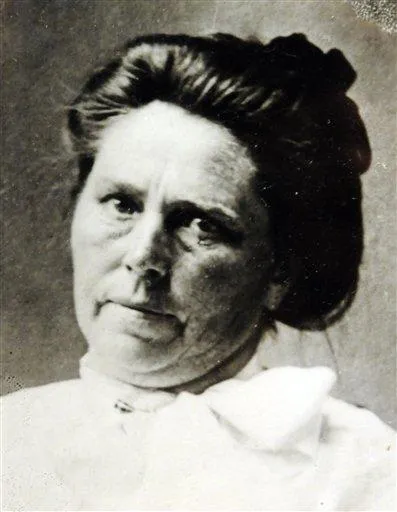
Background
Daisy Louisa de Melker, generally believed to have been born in 1886 in Seven Fountains near Grahamstown in the Cape Colony, became one of the most infamous figures in South African criminal history. As a young woman she trained as a nurse, an occupation that gave her knowledge of medicines and poisons that would later feature centrally in the crimes attributed to her. She lived much of her adult life in and around Johannesburg, in what was then the Transvaal.
Over the course of her life Daisy married three times. Her domestic history was marked by an extraordinary series of deaths, including those of two of her husbands and several of her children. At the time, these deaths were attributed to natural illnesses such as cerebral malaria, chronic disease and kidney failure. It was only the death of her adult son in 1932 that finally prompted the police investigation which would expose a pattern of suspected poisoning stretching back years.
The Deaths of Two Husbands
Daisy's first husband was William Alfred Cowle, a plumber whom she married in the early years of the twentieth century. The couple had several children, most of whom died in infancy or childhood. William Cowle himself died in 1923, his death certified at the time as resulting from natural causes. Daisy received a substantial sum from his life insurance and estate.
Some years later she married her second husband, Robert Sproat, also a plumber. Sproat died in 1927, again leaving Daisy a beneficiary of life insurance and his estate. In both cases the men had reportedly been in reasonable health before suffering sudden, agonising final illnesses. Investigators later came to believe that both husbands had been poisoned with strychnine, a powerful convulsant poison, and that the motive was financial gain from their insurance policies and estates. Daisy subsequently married her third husband, Sydney Clarence de Melker, a former rugby international, whose surname she carried into the history books.
The Death of Rhodes Cowle
The crime that ultimately led to Daisy de Melker's downfall was the death of her surviving son from her first marriage, Rhodes Cecil Cowle, who was about twenty years old. Rhodes died in 1932 after a sudden illness. Unlike the deaths of her husbands, this death aroused suspicion, in part because of the young man's relationship with his mother and questions surrounding money and inheritance.
An investigation was launched and the body of Rhodes was exhumed. Forensic analysis revealed the presence of arsenic, a poison distinct from the strychnine believed to have been used on the two husbands. The discovery of arsenic in Rhodes prompted authorities to exhume the bodies of William Cowle and Robert Sproat as well, and traces consistent with strychnine poisoning were reportedly found. A chemist's record indicating the purchase of arsenic became a key piece of evidence linking Daisy to her son's death.
Investigation and Trial
The case was investigated in Johannesburg and brought to trial in 1932. The prosecution presented evidence that Daisy had obtained poison and that the deaths of her husbands and son fitted a deliberate pattern of poisoning for profit. Testimony from medical experts, chemists and acquaintances was used to build the case against her. The trial attracted enormous public attention and remains one of the most famous murder trials in South African legal history.
Daisy de Melker was charged with the murders of both her former husbands and of her son Rhodes. The jury, however, returned a mixed verdict. She was acquitted of the charges relating to William Cowle and Robert Sproat, but she was convicted of the murder of her son Rhodes Cowle. The conviction rested heavily on the forensic evidence of arsenic poisoning and the documented purchase of the poison.
Execution and Legacy
Following her conviction, Daisy de Melker was sentenced to death. She was hanged in Pretoria in 1932. She is often noted as one of the very few women to be executed in South African history, and her case stands as a landmark in the country's criminal annals.
The de Melker case became a touchstone in South African popular memory and in discussions of forensic toxicology, insurance fraud and so-called 'black widow' poisoning cases. It has been the subject of numerous books, articles and dramatisations over the decades. The combination of a trusted nurse, the calculated use of strychnine and arsenic, and the killing of close family members for financial gain ensured that Daisy de Melker remained a byword for the poisoner in South Africa long after her death.
While she was legally convicted only of the murder of her son, the weight of historical and forensic opinion holds that she was also responsible for the deaths of her two husbands, making her one of the most notorious serial poisoners associated with the early twentieth century.