Background and Early Career
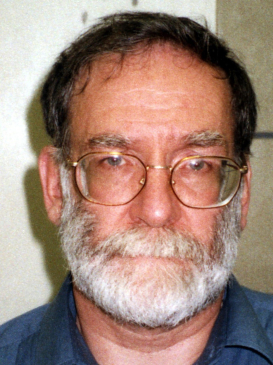
Harold Frederick Shipman was born on 14 January 1946 in Nottingham, England, the second of four children in a working-class family. He was particularly close to his mother, Vera, whose death from lung cancer when he was 17 had a profound effect on him. During her final illness she received morphine administered by a visiting doctor, an experience that observers later noted may have influenced him.
Shipman studied medicine at Leeds School of Medicine, graduating in 1970. He married Primrose Oxtoby in 1966, and the couple had four children. He began his career at Pontefract General Infirmary before joining a general practice in Todmorden, West Yorkshire, in 1974. In 1975 he was discovered to have been forging prescriptions to obtain pethidine, a powerful opioid, for his own use. He was fined and briefly attended a drug rehabilitation clinic.
Despite this early misconduct, Shipman resumed practising medicine. In 1977 he joined the Donneybrook Medical Centre in Hyde, Greater Manchester, where he worked for many years and built a reputation as a hardworking, popular and trusted family doctor. In 1993 he established his own single-handed practice in Hyde.
The Crimes
Over the course of his career, Shipman murdered a large number of his patients, the majority of them elderly women who lived alone and were in reasonable health. His typical method was to administer a lethal dose of diamorphine (medical heroin), often during a home visit, and then to record a natural cause of death on the death certificate. In many cases he attended patients shortly before they died and was the doctor who certified the death.
Because he was a respected physician and the deaths appeared to involve elderly people, they aroused little immediate suspicion. Shipman frequently told relatives that a post-mortem examination was unnecessary, and in some instances encouraged cremation, which destroyed forensic evidence. He also falsified medical records, sometimes altering or backdating notes to create the appearance of a history of illness consistent with the recorded cause of death.
The official inquiry that followed his conviction concluded that he had killed at least 215 patients, and possibly more than 250, over roughly a 23-year period. This makes him one of the most prolific serial killers in documented history. The exact total is uncertain because many cases could not be fully verified, particularly those involving cremation.
Investigation and Arrest
Suspicions were first raised by Dr Linda Reynolds, a local doctor, and by an undertaker who noticed an unusually high number of deaths among Shipman's patients, often elderly women found dead while sitting up and fully clothed. An initial inquiry by the local coroner and police in early 1998 found insufficient evidence and was closed, a decision later heavily criticised.
The investigation was reopened after the death of Kathleen Grundy, a former mayor of Hyde, in June 1998. Grundy's daughter, solicitor Angela Woodruff, became suspicious when a will surfaced, apparently leaving Grundy's estate to Shipman. The will was a clumsy forgery. Grundy's body was exhumed, and toxicology revealed a fatal level of diamorphine.
Police then examined other recent deaths among Shipman's patients. Forensic analysis of his computer records showed that he had retrospectively altered patient notes, with the timestamps revealing the changes were made after the deaths. Further exhumations and toxicology confirmed diamorphine poisoning in multiple cases. Shipman was arrested in September 1998.
Trial and Outcome
Shipman's trial began at Preston Crown Court in October 1999. He was charged with the murders of 15 patients, all of whom had died between 1995 and 1998, and with one count of forging Kathleen Grundy's will. The prosecution presented forensic evidence of diamorphine poisoning together with evidence of his falsified medical records.
On 31 January 2000, the jury found Shipman guilty on all 15 counts of murder and the forgery charge. The trial judge, Mr Justice Forbes, sentenced him to 15 concurrent life sentences and recommended that he never be released. Shipman maintained his innocence throughout and never confessed to any of the killings, a stance he held until his death.
Following the conviction, the Shipman Inquiry, chaired by Dame Janet Smith, was established to examine the full extent of his crimes and the failures that allowed them to continue. Its reports, published between 2002 and 2005, concluded that Shipman had killed at least 215 patients with certainty and that the true figure was likely around 250.
Death and Legacy
Harold Shipman was found hanged in his cell at Wakefield Prison on 13 January 2004, the day before his 58th birthday. His death was ruled a suicide. He never explained his motives, and the reasons for his crimes remain a subject of debate among investigators and commentators.
The Shipman Inquiry produced wide-ranging recommendations that led to significant reforms in the United Kingdom. These included changes to the systems for certifying and investigating deaths, the introduction of a new coronial framework, tighter controls and monitoring of controlled drugs such as diamorphine, and reforms to the way general practitioners are monitored and regulated by the General Medical Council.
The case had a lasting impact on public trust in the medical profession and prompted ongoing scrutiny of how unexpected patterns of patient deaths are detected. Shipman is frequently cited in discussions of medical ethics, professional regulation and the safeguards needed to prevent abuse of the trust placed in doctors.