Overview
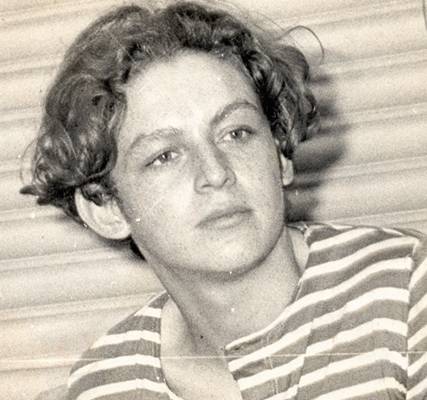
Graham Frederick Young (1947-1990) was an English serial poisoner who became known as the "Teacup Poisoner" because he frequently administered toxic substances through cups of tea and other drinks. Fascinated with poisons and their effects from childhood, Young carried out two distinct campaigns of poisoning, the first against his own family in the early 1960s and the second against co-workers at a Hertfordshire firm in 1971. His favoured agents were thallium and antimony, heavy-metal poisons whose symptoms are easily mistaken for natural illness. He is generally held responsible for at least two deaths, with several other victims left seriously ill.
Early life and first poisonings
Young was born in Neasden, north London, in September 1947. His mother died shortly after his birth, and he was raised partly by an aunt before his father remarried. As a teenager he developed an intense interest in chemistry, toxicology, and notorious poisoners, reportedly idolising figures associated with historic murder cases. He acquired poisons by persuading pharmacists that he needed them for school experiments, exploiting his evident knowledge of chemistry to seem older and more credible than he was.
From around 1961, while still a schoolboy, Young began secretly poisoning members of his own household, including his father, sister, and stepmother, as well as a school friend. His stepmother, Molly Young, died in 1962; her remains were cremated, which complicated later attempts to establish the precise cause. Other family members suffered recurrent unexplained sickness. Suspicion eventually fell on Young, and he was arrested in 1962.
Broadmoor and release
In 1962, at the age of fourteen, Young was convicted of poisoning offences and committed to Broadmoor, the high-security psychiatric hospital, under a court order. He was reportedly the youngest person admitted to Broadmoor in many years. Accounts of his time there describe a continued fixation on poisons and toxicology.
Young was released in 1971 after roughly nine years, having been assessed as no longer a danger. The decision to release him, and the adequacy of the information passed on to those who would supervise or employ him, later became the subject of significant public and official criticism. Shortly after his release he obtained employment at a photographic instruments firm.
The Bovingdon poisonings
In 1971 Young took a job at John Hadland Laboratories in Bovingdon, Hertfordshire, a company that manufactured photographic and optical equipment. Thallium was reportedly used in some of the firm's processes, although Young is also said to have obtained poison independently. He had access to the tea trolley and to drinks shared among staff, which earned him his later nickname.
Over the following months a number of employees fell gravely ill with symptoms including nausea, severe pain, numbness, and hair loss. Two colleagues, Bob Egle and Fred Biggs, died after prolonged suffering. The mysterious wave of sickness at the plant was initially attributed to a possible virus or environmental cause, which workers nicknamed the "Bovingdon bug," delaying recognition that the illnesses were caused by deliberate poisoning.
Investigation and conviction
As concern grew, the company held a meeting at which a medical officer addressed staff. Young drew attention to himself by displaying detailed and unusual knowledge of poisoning symptoms, prompting suspicion. A background check revealed his earlier committal to Broadmoor, and police were alerted. A search uncovered poisons and a diary in which Young had recorded doses administered to his victims and his observations of their reactions, although the defence later disputed how the diary should be interpreted.
Young was arrested and charged. At his trial at St Albans Crown Court in 1972 he was convicted of two counts of murder, in connection with the deaths of Egle and Biggs, along with charges of attempted murder and administering poison. He was sentenced to life imprisonment. He died in prison, at Parkhurst on the Isle of Wight, in 1990 at the age of 42.
Aftermath and legacy
The case prompted official scrutiny of how Young had been released and supervised, and contributed to broader debate in Britain about the handling and release of patients detained for dangerous offences. It also influenced thinking about the controls surrounding access to toxic substances.
Young's notoriety endured in popular culture. His life inspired the 1995 British film The Young Poisoner's Handbook, a darkly stylised dramatisation, and his case is frequently cited in books and documentaries about poisoning and forensic toxicology. His reliance on thallium drew comparisons with other thallium poisoning cases and is sometimes credited with raising awareness of the substance's distinctive symptoms among clinicians.