Background
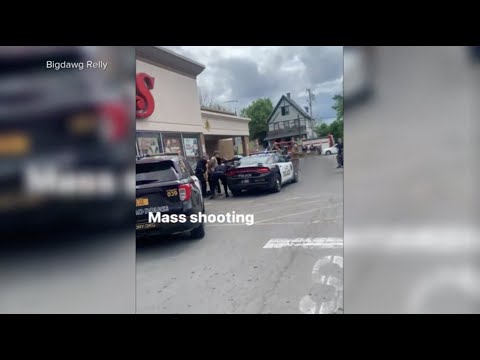
On the afternoon of Saturday, May 14, 2022, a gunman opened fire at a Tops Friendly Markets supermarket on Jefferson Avenue in Buffalo, New York. The store sat at the heart of a predominantly Black neighborhood on the city's East Side, an area where the supermarket served as one of the few accessible sources of fresh groceries for many residents. The attack killed ten people and wounded three others, with eleven of the thirteen victims being Black. It ranks among the deadliest racially motivated mass shootings in modern United States history.
The perpetrator was identified as Payton S. Gendron, an 18-year-old white man from Conklin, New York, a small town in Broome County roughly 200 miles southeast of Buffalo. Investigators determined that Gendron had specifically targeted the Buffalo neighborhood because of its high Black population, selecting the location after researching areas with large concentrations of Black residents. The attack was described by authorities as a premeditated act of racially motivated domestic terrorism.
The Attack
Gendron drove from his home to Buffalo, having traveled to the area days earlier to conduct reconnaissance of the store. He arrived at the Tops supermarket wearing tactical gear, including body armor and a military-style helmet, and carried a legally purchased semi-automatic rifle that he had illegally modified to accept high-capacity magazines. He equipped the weapon and helmet with a camera, livestreaming the assault on the platform Twitch.
He began firing in the parking lot, then moved inside the store, shooting shoppers and employees. The rampage lasted only minutes. Among those killed were security guard Aaron Salter Jr., a retired Buffalo police officer who fired at Gendron in an attempt to stop him but was unable to penetrate the body armor. The ten people killed ranged in age from 32 to 86 and included a church deacon, a substitute teacher, community advocates, and people who had simply stopped to buy groceries. When police arrived, Gendron initially held a weapon to his own neck before surrendering and being taken into custody.
Motive and Radicalization
Before the attack, Gendron posted a lengthy document online espousing the racist 'great replacement' conspiracy theory, a white supremacist ideology that falsely claims there is a deliberate plot to diminish the influence of white populations. The writings detailed his planning, his selection of the target area based on demographic data, and his admiration for previous mass shooters who had carried out similar racially and ethnically motivated attacks.
Investigators found that Gendron had been radicalized largely online and had drawn direct inspiration from the 2019 Christchurch mosque shootings in New Zealand, mirroring that attacker's use of a livestream and a written manifesto. It later emerged that, roughly a year before the attack, Gendron had been referred for a mental health evaluation after making a threatening remark at his high school, but he was released and not subject to any measure that would have prevented him from acquiring firearms.
Investigation and Charges
Gendron was arrested at the scene without further bloodshed. He was initially charged in Erie County with first-degree murder and was later indicted on a sweeping state indictment that included multiple counts of first-degree and second-degree murder, domestic terrorism motivated by hate, and weapons charges. The terrorism charge was a relatively new New York statute enacted after a 2019 mass shooting, and the Buffalo case was among its earliest high-profile applications.
Federal authorities also brought charges. The U.S. Department of Justice filed a 27-count indictment that included hate-crime offenses resulting in death and firearms violations, several of which were eligible for the federal death penalty. The dual state and federal prosecutions proceeded on parallel tracks, with the federal capital question becoming a central point of contention given that New York State does not have the death penalty.
Trial and Sentencing
In November 2022, Gendron pleaded guilty to all state charges, including domestic terrorism motivated by hate and ten counts of first-degree murder. It was the first time a defendant had been convicted under New York's domestic terrorism statute. On February 15, 2023, he was sentenced in Erie County to life in prison without the possibility of parole. The sentencing hearing was marked by emotional victim impact statements, during which a relative of one victim lunged toward Gendron, briefly disrupting proceedings.
The federal case continued separately. Federal prosecutors pursued hate-crime charges, and the U.S. Department of Justice indicated it would seek the death penalty, setting up a capital trial. Because the federal proceedings extended beyond the state guilty plea, the final outcome of the federal case is treated here as a matter that continued after the state sentencing rather than as a concluded result.
Aftermath and Legacy
The shooting devastated Buffalo's East Side community and reignited national debate over white supremacist violence, online radicalization, and the spread of the 'great replacement' conspiracy theory. The Tops store closed for about two months for repairs and reopened in July 2022, a decision that drew mixed reactions from residents who associated the site with trauma but also depended on it as their primary grocery store in what had been a food-insecure area.
The attack intensified scrutiny of social media platforms over the livestreaming and sharing of violent extremist content, prompting investigations and legal action over the role online services played in the gunman's radicalization and the spread of the footage. It also fueled renewed calls in New York and nationally for stronger 'red flag' laws and restrictions on body armor and high-capacity magazines. New York subsequently strengthened several gun-related statutes. Memorials honoring the ten victims were established in the neighborhood, and community leaders continued to advocate for investment in the East Side and for measures to combat hate-motivated violence.