Background
The Beslan school siege took place in the town of Beslan, in the Republic of North Ossetia-Alania, in the North Caucasus region of the Russian Federation. The attack occurred against the backdrop of the Second Chechen War, an armed conflict between Russian federal forces and separatist militants seeking independence for the neighbouring Republic of Chechnya. Throughout the early 2000s, militant groups associated with the Chechen insurgency carried out a series of high-profile attacks on Russian civilian targets, including the 2002 Moscow theatre hostage crisis.
Responsibility for the Beslan attack was later claimed by Chechen warlord Shamil Basayev, who said it had been carried out by a unit linked to the militant organisation known as Riyad-us Saliheen (the Brigade of Martyrs). Basayev was one of the most prominent and radical figures of the Chechen insurgency and had been associated with several mass-casualty operations. North Ossetia, a predominantly Orthodox Christian republic bordering the mainly Muslim Ingushetia, had long been a flashpoint of ethnic and political tension in the region.
The Attack
On the morning of 1 September 2004, traditionally celebrated across the former Soviet Union as the Day of Knowledge marking the start of the school year, a group of heavily armed militants seized School Number One in Beslan. The date meant the school was crowded with children, parents and teachers gathered for opening ceremonies. The attackers, who arrived in vehicles, herded more than 1,100 people into the building, the majority of them children.
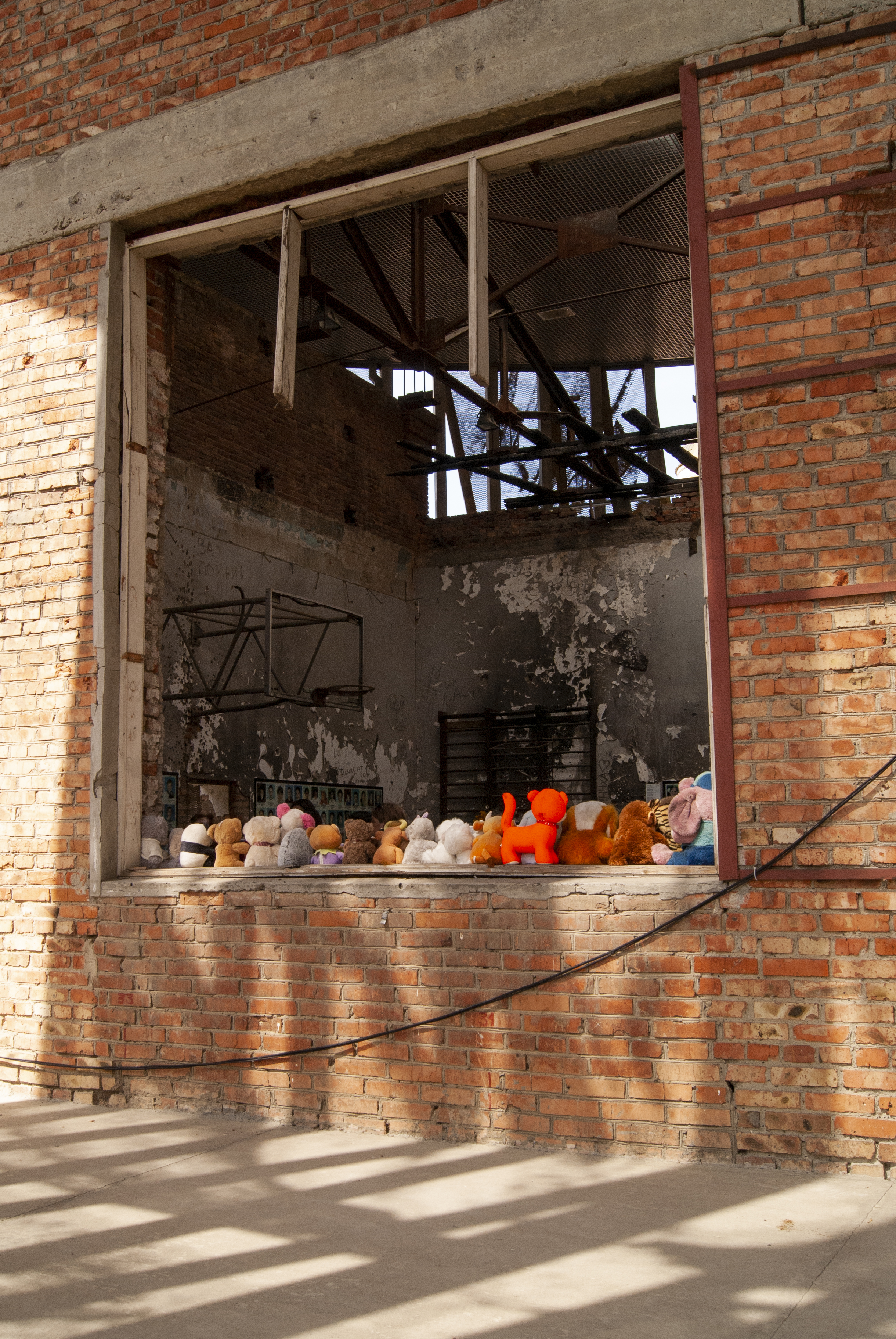
The hostages were forced into the school's gymnasium, where the militants rigged improvised explosive devices and strung wires between basketball hoops. Conditions inside deteriorated rapidly over the following days. Hostages were denied food and water in the late-summer heat, and many children were reduced to drinking their own urine. The attackers shot a number of adult male hostages early in the siege and demanded the withdrawal of Russian forces from Chechnya and recognition of Chechen independence.
The Siege and Its End
The standoff lasted three days, from 1 to 3 September 2004, as Russian security forces, including units of the Federal Security Service (FSB) such as the Alpha and Vympel special forces groups, surrounded the school. Negotiations were attempted, and a small number of hostages, including some infants and mothers, were released on the second day after talks involving former Ingush president Ruslan Aushev.
On 3 September 2004, the siege ended in chaos and violence. Explosions tore through the gymnasium, and the ensuing collapse of the roof, combined with gunfire as hostages fled and security forces stormed the building, produced catastrophic casualties. The exact sequence of events that triggered the final assault has remained a subject of dispute. The fighting and explosions resulted in the deaths of at least 334 people, including more than 180 children, with hundreds more wounded. Most of the attackers were killed in the assault.
Perpetrators
Investigators concluded that the assault was planned and directed by Shamil Basayev, who issued a statement claiming responsibility several weeks after the attack. The group of attackers numbered in the dozens and included individuals of varied backgrounds drawn from the North Caucasus. Russian authorities identified the field commander on the ground as Ruslan Khuchbarov, sometimes known by the nickname 'Polkovnik' (the Colonel).
Only one attacker, Nur-Pashi Kulayev, was captured alive. He was tried in Russia, convicted in 2006 on charges including terrorism and murder, and sentenced to life imprisonment. Shamil Basayev was killed in July 2006 in an incident in Ingushetia that Russian authorities attributed to a security operation. Many of the precise details of the planning, the number of attackers, and individual identities remained contested in subsequent investigations and reporting.
Aftermath and Legacy
The Beslan siege was one of the deadliest terrorist attacks in modern Russian history and provoked international condemnation. In its aftermath, President Vladimir Putin announced sweeping changes to Russia's political and security structures, including measures that centralised power and ended the direct popular election of regional governors. Critics argued these reforms used the tragedy to consolidate Kremlin authority.
The handling of the crisis generated lasting controversy and grief. Survivors and victims' relatives, organised in groups such as the Mothers of Beslan, demanded accountability and criticised official accounts of the death toll, the use of heavy weaponry during the assault, and the conduct of the rescue operation. Several official and parliamentary inquiries were held, but many families regarded their findings as incomplete. In 2017, the European Court of Human Rights ruled that Russian authorities had violated the right to life through failures in planning and the use of disproportionate force. The ruined school gymnasium has been preserved as a memorial to the victims, and 3 September is observed in Russia as a day of remembrance and solidarity against terrorism.