Background
On the night of September 26-27, 2014, 43 male students from the Raul Isidro Burgos Rural Teachers' College of Ayotzinapa were forcibly disappeared in the city of Iguala, in the southern Mexican state of Guerrero. The college, known as a 'normal rural,' had a long tradition of left-wing activism and producing teachers for impoverished rural communities. Its students were known for political mobilization and for commandeering buses to travel to protests, a practice that was generally tolerated by transport companies.
Guerrero was, and remains, one of Mexico's poorest and most violence-stricken states, with significant production of opium poppy and a strong presence of organized crime. Iguala at the time was effectively dominated by a drug-trafficking organization known as Guerreros Unidos ('United Warriors'), which had infiltrated local government and police. The municipal political environment was deeply compromised by collusion between officials and the cartel.
The Attack and Disappearance
On September 26, 2014, the students traveled to Iguala to commandeer buses, intending to use them to attend the annual October 2 commemoration in Mexico City marking the 1968 Tlatelolco massacre. As the students moved through Iguala in several buses, local municipal police opened fire on them in multiple locations across the city over several hours. Six people were killed during the night, including three students; one student, Julio Cesar Mondragon, was later found dead with his face mutilated. Dozens were wounded.
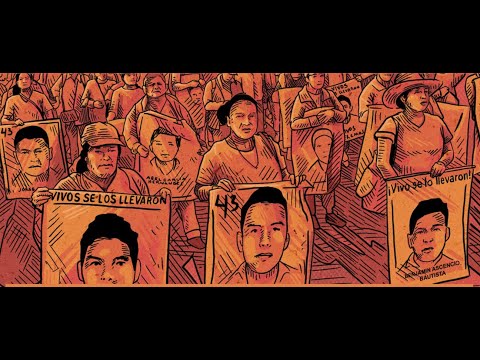
By the end of the night, 43 students had been detained by police and taken away. They were never seen again. The disappearance triggered national and international outrage and became one of the most notorious human rights cases in modern Mexican history, symbolized by the chant 'Vivos se los llevaron, vivos los queremos' ('They took them alive, we want them back alive').
The Official Investigation and the 'Historical Truth'
Under the administration of President Enrique Pena Nieto, the federal Attorney General's Office (PGR) advanced an account it labeled the 'historical truth.' According to this version, corrupt Iguala municipal police handed the students over to the Guerreros Unidos cartel, which mistook them for members of a rival group. The cartel allegedly killed the students and incinerated their bodies in a garbage dump in the nearby town of Cocula, then disposed of the remains in a river.
This account was widely challenged. An Interdisciplinary Group of Independent Experts (GIEI), appointed under the Inter-American Commission on Human Rights, concluded that it was physically impossible for the bodies to have been burned at the Cocula dump as described, citing fire-science analysis. Investigators also documented widespread torture used to extract confessions from suspects, undermining the reliability of the official narrative.
Arrests and Accused
Iguala's mayor, Jose Luis Abarca Velazquez, and his wife, Maria de los Angeles Pineda Villa, fled after the events and were captured in Mexico City in November 2014. Authorities alleged that Abarca had ordered police to confront the students to prevent disruption of a public event, and that Pineda's family had ties to organized crime. Abarca was later convicted on organized-crime and kidnapping-related charges in connection with other matters, though the case has been marked by repeated legal reversals.
More than 100 people were arrested over time, including municipal police officers, alleged cartel members, and officials. However, prosecutions were repeatedly hampered by allegations of torture, fabricated evidence, and procedural violations, leading courts to order the release of numerous suspects. Only small skeletal fragments belonging to a handful of the students have ever been positively identified through forensic analysis.
Reopened Investigation and the Role of the State
After Andres Manuel Lopez Obrador became president in 2018, his government created a truth commission and reopened the investigation, formally rejecting the previous 'historical truth.' Investigators increasingly characterized the events as a 'state crime,' implicating not only municipal police and the cartel but also state and federal forces, including the army. Soldiers from a local battalion were accused of monitoring the students in real time and failing to intervene.
In 2022, the former federal Attorney General, Jesus Murillo Karam, who had overseen the original investigation, was arrested on charges including forced disappearance, torture, and obstruction of justice related to the construction of the official narrative. Arrest warrants were also issued for military personnel. These developments underscored official conclusions that authorities at multiple levels were complicit or had covered up what occurred.
Aftermath and Ongoing Status
More than a decade later, the fate of most of the 43 students remains unknown, and their families continue to demand answers and accountability. The case has become a defining symbol of impunity, enforced disappearance, and the entanglement of organized crime with the Mexican state. Annual protests mark the anniversary, and 'Ayotzinapa' is now shorthand internationally for state-linked human rights abuses in Mexico.
The investigation remains formally open and unresolved. Independent experts and the victims' families have repeatedly accused successive governments of withholding evidence, particularly military records. While some remains have been identified, no full and conclusive account of what happened to the students has been accepted by the families or independent monitors, and many of those initially detained have been freed amid concerns over how evidence was obtained.