Background
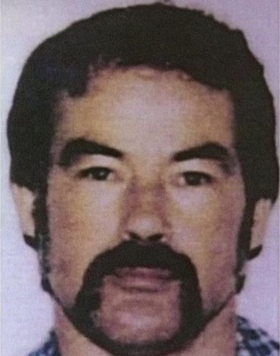
Ivan Robert Marko Milat was born on 27 December 1944 in Guildford, New South Wales, one of fourteen children in a large family of Croatian and Australian descent. He grew up in the Sydney area and accumulated a criminal record from his youth, including charges related to theft and, in the 1970s, an acquittal on rape charges. By the early 1990s he was employed as a road worker for the New South Wales Department of Main Roads and lived in the Southern Highlands region south-west of Sydney.
The killings centred on the Belanglo State Forest, a remote pine and eucalyptus plantation near the town of Berrima, roughly 15 kilometres from the village of Hilltop where Milat had connections. The dense, isolated forest, accessed by unsealed fire trails, became the dumping ground for the victims. The crimes targeted young backpackers travelling along the Hume Highway, a major route between Sydney and Melbourne, where hitchhiking was a common means of travel for budget tourists during that era.
The Murders and Discovery
Between 1989 and 1992, seven young backpackers disappeared while travelling in New South Wales. The victims were British travellers Caroline Clarke and Joanne Walters, both 22; German travellers Gabor Neugebauer, Anja Habschied, and Simone Schmidl; and Australians James Gibson and Deborah Everist, both 19. The victims were typically picked up while hitchhiking and driven to the forest, where they were killed.
The first remains were discovered on 19 September 1992, when two orienteering runners found a partially decomposed body in the forest; a second body was located nearby the following day. These were identified as Clarke and Walters. The discovery prompted further searches, and between October and November 1993 the remains of the other five victims were found in shallow graves and bush sites across the forest. The victims had died by various means, including gunshot wounds, stabbing, and strangulation. Some had been shot multiple times, and forensic analysis indicated significant brutality.
Investigation and Arrest
The discoveries triggered one of the largest criminal investigations in Australian history, conducted under the codename Task Force Air. Detectives compiled a list of thousands of potential suspects and appealed publicly for information. A breakthrough came from Paul Onions, a British traveller who in 1990 had escaped from a man who picked him up near Casula and then drew a gun; Onions fled and flagged down a passing car. After media coverage of the murders reached the United Kingdom, Onions contacted Australian police and provided a detailed account that helped focus the inquiry.
Investigators linked the crimes to Ivan Milat through a combination of witness testimony, vehicle and firearm evidence, and forensic material. On 22 May 1994, police arrested Milat at his home in Eaglevale. A search of his properties and those of relatives recovered firearms, camping equipment, clothing, and other items connected to the victims, including a distinctive sleeping bag and rope. A Ruger .22 rifle linked to the ballistics of the killings was a key piece of physical evidence.
Trial and Conviction
Ivan Milat's trial began in March 1996 in the New South Wales Supreme Court in Sydney. The prosecution presented extensive circumstantial and forensic evidence tying Milat to all seven victims, including possessions of the deceased found among his belongings and ballistics evidence connecting the firearm to the murders. Paul Onions testified and identified Milat as the man who had attacked him in 1990. Milat maintained his innocence throughout and suggested that others, including family members, may have been responsible.
On 27 July 1996, the jury found Milat guilty of the seven murders, as well as of the attempted abduction and related offences against Onions. He was sentenced to seven consecutive life sentences without the possibility of parole, plus additional years for the offences against Onions. The presiding judge described the crimes as among the worst in Australian criminal history.
Aftermath and Death
The case had a lasting impact on Australian society, prompting widespread concern about the safety of hitchhiking and backpacker tourism, and influencing safety advice issued to travellers. The killings inspired books, documentaries, and dramatisations, and the term Backpacker Murders entered common usage. Speculation persisted in some quarters about whether Milat had acted entirely alone or whether other unsolved disappearances might be connected to him, though no further convictions resulted.
While imprisoned, Milat engaged in acts of self-harm, including swallowing objects and amputating part of his own finger. In 2010, his great-nephew Matthew Milat murdered a young man in the same Belanglo State Forest, a crime widely reported because of the family and geographic connection. Ivan Milat was diagnosed with terminal cancer in 2019 and died in custody at Long Bay Correctional Complex in Sydney on 27 October 2019, aged 74. He never confessed to the murders.