Background
On the morning of 29 July 2024, a Taylor Swift-themed children's dance and yoga workshop was being held at the Hart Space, a community studio on Hart Street in Southport, a seaside town in Merseyside, north-west England. The summer holiday class catered to young children and was run by a self-employed instructor. The session was one of many such workshops held across the United Kingdom during the school summer break.
The perpetrator, Axel Muganwa Rudakubana, was 17 years old at the time of the attack. He had been born in Cardiff, Wales, in 2006 to a family of Rwandan origin and was living in the village of Banks, near Southport. Because he was under 18, his identity was initially protected by law and could not be reported. A judge later lifted reporting restrictions, allowing his name to be published.
The Attack
Rudakubana arrived at the venue by taxi and entered the building carrying a knife. He attacked the children attending the workshop and several adults who tried to protect them. Three young girls were killed: Bebe King, aged six; Elsie Dot Stancombe, aged seven; and Alice da Silva Aguiar, aged nine. Ten other people were injured in the assault, including eight children and two adults, with several suffering serious, life-threatening wounds.
Adults present, including the workshop's instructor and a businessman from a neighbouring unit, intervened to try to stop the attack and shield children, sustaining injuries themselves. Police were called and arrived rapidly, arresting Rudakubana at the scene. The attack caused profound shock nationally given the young ages of the victims and the setting of a children's holiday activity.
Aftermath and Disorder
The killings triggered widespread public grief and an outpouring of tributes in Southport. In the days that followed, false claims about the attacker's identity, religion and immigration status spread rapidly on social media. These false narratives helped fuel violent disorder. On 30 July a riot took place near a mosque in Southport, and over subsequent days rioting and unrest spread to towns and cities across England and into Northern Ireland.
Authorities stressed that the rumours circulating online were inaccurate. The unrest led to hundreds of arrests and numerous prosecutions, including of people who had posted inflammatory or false material online. The events prompted significant debate in the UK about social media, misinformation and public order, and about what information police could release about a suspect during an active investigation involving a minor.
Investigation and Charges
Rudakubana was charged with three counts of murder and ten counts of attempted murder, as well as possession of a bladed article. In the months after the attack, further charges were brought. He was charged with production of a biological toxin, ricin, and with a terrorism offence relating to possession of a document, an al-Qaeda training manual, likely to be useful to a person committing or preparing an act of terrorism.
Counter-terrorism investigators were involved in the case. Officials stated that, while Rudakubana had material associated with extremism and an apparent fixation on violence and genocide, no specific ideological motivation in the conventional sense had been established, and the case was not declared a terrorist incident under the legal definition. It later emerged that he had previously been referred to the UK's Prevent counter-extremism programme on multiple occasions, but was not taken on for intervention.
Trial and Sentencing
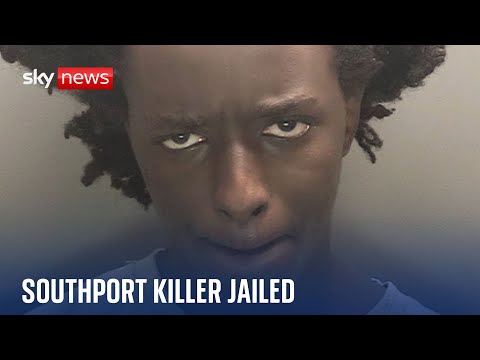
At a hearing at Liverpool Crown Court on 20 January 2025, Rudakubana pleaded guilty to all charges, including the three murders, the ten attempted murders, possession of a knife, producing ricin and the terrorism document offence. The guilty pleas came on what was due to be the first day of his trial, sparing the bereaved families a full trial.
On 23 January 2025 he was sentenced. Because he was 17 at the time of the offences, he could not receive a whole-life order, which is reserved for offenders aged 18 or over. The judge, Mr Justice Goose, imposed a life sentence with a minimum term of 52 years before he could be considered for parole, describing the crimes as among the most extreme and exceptional the court had encountered and stating it was unlikely Rudakubana would ever be released.
Legacy and Inquiry
The Southport attack prompted national reflection on child safety, knife crime, online radicalisation and the handling of young people who show warning signs of violence. The government announced a public inquiry to examine how state agencies, including the police, social services and the Prevent programme, had dealt with Rudakubana before the attack, and whether the killings could have been prevented.
The three victims, Bebe King, Elsie Dot Stancombe and Alice da Silva Aguiar, were widely mourned, with vigils, fundraising and tributes held in Southport and beyond. The case remained a focus of debate over how authorities communicate during fast-moving investigations and over the spread of online misinformation following violent attacks.