Overview
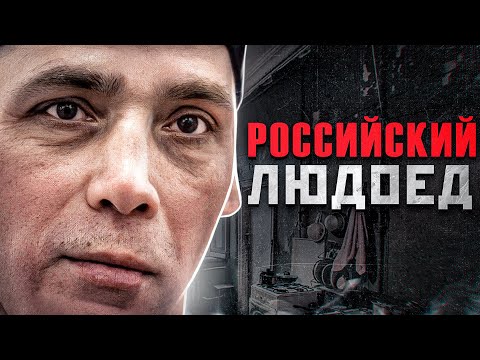
Vladimir Nikolaev was a Russian man from Cheboksary, the capital of the Chuvash Republic in the Russian Federation, who became known in the late 1990s for a case of murder and cannibalism. According to reporting on the case, Nikolaev, who was unemployed at the time, killed two men he knew and committed acts of cannibalism involving their remains. The case drew particular attention because of claims that he attempted to dispose of, and even sell, human flesh, leading to its description in some accounts as one of post-Soviet Russia's most disturbing cannibalism cases.
Because the case received limited coverage in widely accessible, reliable English-language sources, several specific details remain difficult to verify with confidence. The broad outline, an unemployed Cheboksary man convicted of killing acquaintances and engaging in cannibalism in the mid-to-late 1990s, is the most consistently repeated element across the available accounts.
The Crimes
The case centered on the deaths of two men described as acquaintances of Nikolaev. Accounts state that the killings occurred against a background of heavy drinking, a recurring feature in many reported Russian cannibalism cases of the period, and that Nikolaev dismembered the bodies of his victims afterward. He is reported to have consumed parts of the remains.
One of the most widely repeated and disturbing claims about the case is that Nikolaev did not consume all of the flesh himself but instead attempted to distribute or sell some of it, with reports referencing a local market. This particular detail, while frequently cited in summaries of the case, is among the elements that are hardest to confirm through primary or authoritative sources, and it should be treated with caution.
Investigation and Arrest
Nikolaev was identified and arrested by Russian authorities after the discovery of human remains connected to him. As with the precise sequence of the crimes, detailed and reliably sourced accounts of the investigative process, including how suspicion first fell on Nikolaev and what physical evidence was recovered, are not well documented in widely available English-language material.
Following his arrest, the matter proceeded to the Russian criminal justice system. The case is generally described as solved, with Nikolaev identified as the perpetrator of the two killings and held responsible for the associated acts.
Legal Outcome
Nikolaev was convicted in connection with the killings and the cannibalism. Reporting on the case has commonly noted that questions of his mental state were significant in the legal proceedings, a recurring issue in cases of this nature where forensic psychiatric evaluation determines whether a defendant is held criminally responsible or directed to compulsory psychiatric treatment.
The exact terms of the disposition, including the precise sentence or any psychiatric commitment, are not consistently or reliably reported in the sources available, and so are left unstated here rather than asserted with false precision.
Context and Documentation
The Nikolaev case is sometimes grouped with other Russian and former-Soviet cannibalism cases of the 1990s and early 2000s, a period in which economic hardship, widespread alcohol abuse and social dislocation following the collapse of the Soviet Union formed the backdrop to a number of extreme crimes. It is often referenced alongside other regional cases in true-crime listings rather than in dedicated scholarly or major-press investigations.
Researchers and readers should be aware that much of the circulating information about this case derives from secondary true-crime compilations rather than from authoritative court records or contemporaneous major news reporting. As a result, several specifics, including exact dates, the number and identities of victims, and the claim of selling flesh at a market, carry a meaningful degree of uncertainty.