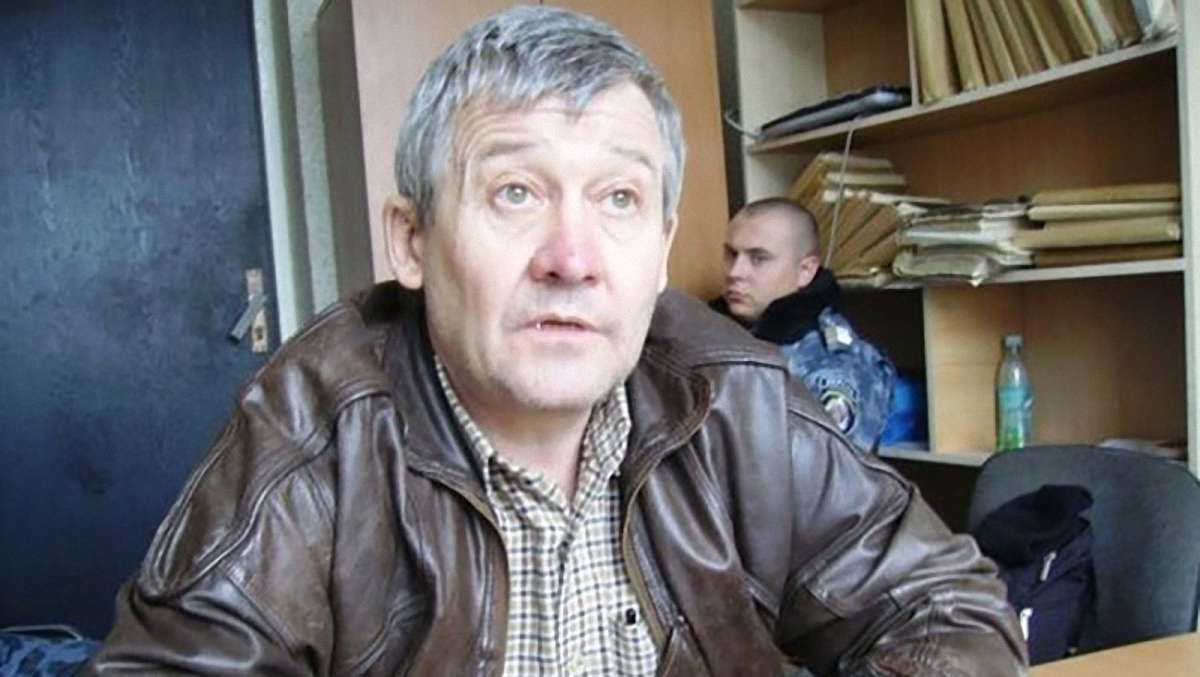
Oleksiy Pukach was a general and head of the surveillance and external observation department of Ukraine's Interior Ministry. He confessed to strangling Gongadze and beheading the body, and in 2013 was sentenced to life imprisonment. He maintained he had acted on orders from senior officials, including then-Interior Minister Yuriy Kravchenko.
Victim
Georgiy Gongadze (31)
Location
Kyiv, Ukraine
Summary
Ukrainian investigative journalist Georgiy Gongadze was abducted, strangled and beheaded near Kyiv in 2000, sparking a national political crisis.
Details
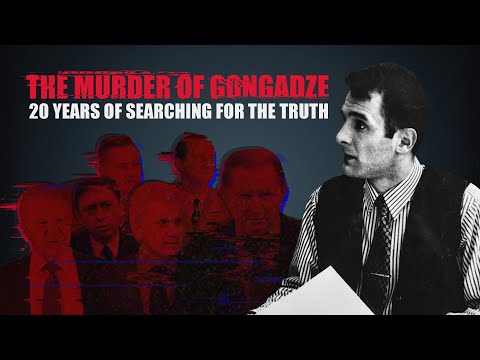
Georgiy Gongadze, a 31-year-old journalist and founder of the online outlet Ukrainska Pravda, was abducted in Kyiv on 16 September 2000 after reporting on high-level corruption. His decapitated body was discovered weeks later in a forest near Tarashcha, outside Kyiv. Secretly recorded tapes implicated President Leonid Kuchma and senior officials in the case, triggering mass protests. Police general Oleksiy Pukach confessed and was convicted; three other officers were also sentenced for their roles in the killing.
Overview
Georgiy Gongadze (Ukrainian: Heorhiy Gongadze) was a Ukrainian investigative journalist of Georgian-Ukrainian descent who co-founded the online newspaper Ukrayinska Pravda. Known for his reporting on high-level corruption in Ukraine, he disappeared in Kyiv on 16 September 2000. His decapitated body was discovered weeks later in a forest near the town of Tarashcha, in the Kyiv region. The killing became one of the most consequential political crimes in post-Soviet Ukraine, triggering mass protests, a long-running scandal implicating senior officials, and a criminal investigation that stretched across more than a decade.
The journalist and his work
Gongadze was born on 21 May 1969 in Tbilisi, in what was then Soviet Georgia. He moved to Ukraine and became a prominent figure in independent journalism. In April 2000 he co-founded Ukrayinska Pravda, an internet publication that became widely read for its critical coverage of President Leonid Kuchma's administration and of corruption among Ukraine's political and business elite.
In the months before his death, Gongadze publicly complained of surveillance and intimidation. He wrote an open letter to the Prosecutor General describing being followed and feeling under threat. His reporting and outspokenness made him a notable critic of those in power, and his disappearance was immediately viewed by colleagues as connected to his work.
Disappearance and discovery
Gongadze disappeared on the evening of 16 September 2000 after leaving the home of a colleague in Kyiv. He was abducted, strangled, and beheaded. In early November 2000, a headless body was found in a forest near Tarashcha, roughly 70 kilometres from Kyiv. The remains were later identified as Gongadze's, though disputes over identification persisted for some time and complicated the early stages of the case.
The discovery and the manner of the killing shocked the public and intensified suspicion that the crime had been ordered at a high level rather than being an ordinary murder.
The Cassette Scandal and political crisis
In late November 2000, opposition politician Oleksandr Moroz publicly released secret audio recordings allegedly made by Mykola Melnychenko, a former officer of the presidential security service. The recordings, said to have been made in President Kuchma's office, appeared to capture conversations in which officials discussed dealing with Gongadze. The episode became known as the 'Cassette Scandal' (Kuchmagate).
The recordings sparked the 'Ukraine without Kuchma' protest movement and a prolonged political crisis. Kuchma denied involvement and questioned the authenticity and interpretation of the tapes. The authenticity, completeness, and meaning of the recordings remained disputed, but they fundamentally damaged Kuchma's standing and shaped Ukrainian politics for years.
Investigation and convictions
The investigation extended over more than a decade. Several former officers of the Ministry of Internal Affairs were eventually prosecuted. In 2008, three former police officers were convicted of involvement in the killing. The most prominent defendant was Oleksiy Pukach, a former general who had headed a department of the interior ministry. Pukach was arrested in 2009.
In 2013, a Ukrainian court convicted Pukach of the murder and sentenced him to life imprisonment. During proceedings Pukach stated that he had acted on orders, and he and others pointed toward senior officials, including former interior minister Yuriy Kravchenko. Kravchenko was found dead in March 2005, shortly before he was due to be questioned; his death was officially ruled a suicide, a conclusion that has been widely questioned.
Legacy and unresolved questions
The Gongadze case remains a landmark in the history of press freedom and accountability in Ukraine. While the men who physically carried out the killing were convicted, the central question of who ordered the murder was never resolved to the satisfaction of Gongadze's family, fellow journalists, and human rights observers. Critics argued that the masterminds were shielded from full accountability.
In 2005 the European Court of Human Rights ruled in favour of Gongadze's widow, Myroslava Gongadze, finding that Ukrainian authorities had failed to protect his life and to conduct an effective investigation. The case continues to be cited as a symbol of the dangers faced by investigative journalists and of impunity for crimes against the press in the post-Soviet space.
Video Coverage
Frequently asked questions
What was the The Murder of Georgiy Gongadze case?
Ukrainian investigative journalist Georgiy Gongadze was abducted, strangled and beheaded near Kyiv in 2000, sparking a national political crisis.
Who was responsible for The Murder of Georgiy Gongadze?
Oleksiy Pukach. Oleksiy Pukach was a general and head of the surveillance and external observation department of Ukraine's Interior Ministry. He confessed to strangling Gongadze and beheading the body, and in 2013 was sentenced to life imprisonment. He maintained he had acted on orders from senior officials, including then-Interior Minister Yuriy Kravchenko.
Who were the victims of the The Murder of Georgiy Gongadze case?
The named victims were Georgiy Gongadze.
Where and when did the The Murder of Georgiy Gongadze case take place?
It took place in Kyiv, Ukraine in 2000.
Was the The Murder of Georgiy Gongadze case solved?