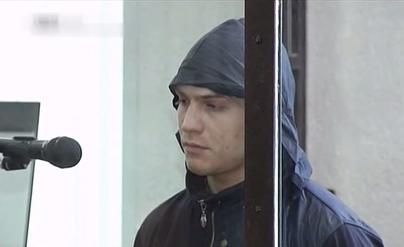
Background
Alexander Vladimirovich Bychkov was born on 1 April 1988 in Belinsky, a small town in Penza Oblast in central Russia named after the 19th-century literary critic Vissarion Belinsky. He grew up in modest circumstances in the same provincial setting where he would later commit his crimes. Accounts of his life describe a withdrawn young man with few close relationships and a sense of personal grievance.
By his own later admission, recorded in a diary that became central to the case, Bychkov dated the beginning of his killings to a period after he was rejected by a girlfriend. He styled himself in writing as a 'lone wolf,' a self-description that prosecutors and the press would repeatedly cite. Russian media gave him a series of lurid nicknames, including the 'Belinsky maniac' and the 'Belinsky cannibal,' the latter drawn from his own statements about eating parts of his victims.
The Killings
Between September 2009 and early 2012, Bychkov murdered nine people in and around Belinsky. His victims were overwhelmingly vulnerable men: elderly people, heavy drinkers, and homeless individuals who would not be quickly missed and whose disappearances were unlikely to prompt intensive searches. His first proven killing, on 17 September 2009, was of a 60-year-old local man whom he stabbed after the victim fell asleep at Bychkov's house.
Bychkov typically lured victims to his home or to secluded, deserted places. He killed them with a knife or a hammer, in at least one case striking under the lower jaw or delivering blows to the head and chest. He then dismembered the corpses and disposed of the remains, burying parts in his yard or at the local rubbish dump and concealing others in an abandoned waste-oil pit. Investigators later reported that he smashed several skulls and scattered bone fragments in a ravine. Prosecutors said he deliberately committed many killings during warmer months, apparently to direct suspicion toward seasonal migrant workers.
The Diary and Arrest
Bychkov's downfall came not from the murders themselves but from an unrelated property crime. On the night of 21 January 2012 he broke into a hardware store in Belinsky, stealing knives and a sum of money. He was arrested within days. When police searched his home in connection with the burglary, they discovered a handwritten personal diary in which the author meticulously documented his killings.
The diary, in which Bychkov referred to himself as a 'lone wolf,' described the murders in detail and claimed responsibility for eleven killings, more than the nine that were ultimately proven in court. Searches of the property also turned up a collection of knives and personal belongings of victims. During interrogation Bychkov went further than the written record, telling investigators that he had cut out and eaten internal organs from some of his victims, claiming to have cooked and consumed the hearts of at least two people. These cannibalism claims, while widely reported, rested largely on his own statements.
A Prior Wrongful Accusation
The Bychkov case drew additional attention because some of his killings had earlier been attributed to another man. According to reporting on the case, a mentally ill local resident, Alexander Zhuplov, had been blamed for several murders that were in fact committed by Bychkov and was confined to a psychiatric institution. After Bychkov's confessions and conviction, that earlier case was subject to review.
The episode underscored how Bychkov's choice of marginalized victims, and the assumption that outsiders were responsible, had allowed his crimes to go undetected for more than two years. It also illustrated the risks of premature conclusions in investigations involving vulnerable defendants and victims who lived on the margins of the community.
Trial and Sentence
Ahead of trial, Bychkov underwent psychiatric examination. Specialists diagnosed him with a mixed personality disorder but concluded that he was legally sane and competent to stand trial, capable of understanding the nature of his actions. This finding meant he would face criminal punishment rather than indefinite psychiatric commitment.
On 22 March 2013, the Penza Oblast Court found Bychkov guilty of nine murders and of the burglary that had led to his capture. He was sentenced to life imprisonment, the most severe penalty available in Russia following the country's moratorium on the death penalty. The sentence subsequently entered into legal force after the appeal period.
Aftermath
Bychkov's case became one of the more notorious provincial Russian serial-murder cases of its era, frequently cited alongside the country's better-known cases because of the diary that documented his crimes and the cannibalism he described. The reliance on his own writings and confessions, rather than on the killings being independently uncovered, made the diary the defining feature of the case in subsequent coverage.
Bychkov continued to attract media attention from prison. Russian outlets reported in later years that he had married while incarcerated and become a father, and that he expressed hopes of eventual release, claims that generated renewed public commentary. He remains held under a life sentence in the Russian penal system. As with many cases of this kind, reporting on his personal life and on the full extent of his crimes should be treated with caution, given how much of the record derives from his own accounts.