Background
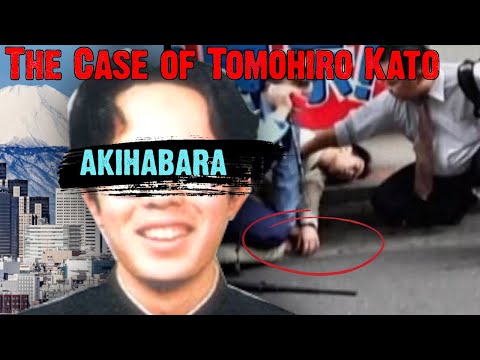
Akihabara is a busy commercial district in Tokyo's Chiyoda ward, famous as a hub for electronics retailers and otaku culture, including anime, manga, and video games. On Sundays, the central stretch of Chuo-dori was traditionally closed to vehicle traffic and turned into a pedestrian zone (hokosha tengoku, or "pedestrian paradise"), drawing large crowds of shoppers and tourists.
The perpetrator, Tomohiro Kato, was born in 1982 in Aomori Prefecture in northern Japan. At the time of the attack he was 25 years old and employed as a temporary worker at an automobile parts factory in Kanagawa Prefecture. In the period before the attack he had posted messages on an online forum expressing frustration, isolation, and discontent with his life and work, and he indicated dissatisfaction after an apparent dispute and concerns over his employment.
The Attack
On the afternoon of Sunday, June 8, 2008, Kato drove a rented two-ton truck into the pedestrian zone on Chuo-dori in Akihabara. He deliberately drove into a crowd of pedestrians at the intersection, striking and knocking down a number of people.
After the vehicle came to a stop, Kato got out and began attacking bystanders and people who had come to help the injured, stabbing them with a knife (a dagger-type blade). The rampage killed seven people and injured ten others. Victims included pedestrians struck by the truck as well as people who were stabbed during the subsequent attack. The incident took place in broad daylight amid crowds, and the scale and public setting made it one of Japan's most shocking mass-casualty crimes of the era.
Arrest
Police officers were in the vicinity and responded quickly. Kato was confronted and subdued at the scene shortly after the stabbings began, and he was arrested without managing to flee. He did not resist in a way that prolonged the rampage beyond the initial minutes.
Investigators established that Kato had posted messages online in the hours and days leading up to the attack, including statements foreshadowing his intent to carry out a killing in Akihabara. These postings became a focus of public discussion about whether warning signs had been missed, and about the role of online forums and the social pressures faced by non-permanent (temporary) workers in Japan.
Trial and Sentence
Kato was charged with murder and attempted murder. His trial proceeded through the Japanese court system. In March 2011, the Tokyo District Court convicted him and sentenced him to death, finding him criminally responsible for the killings and injuries.
Kato appealed, but the conviction and death sentence were upheld on appeal. The Tokyo High Court rejected his appeal in 2012, and the Supreme Court of Japan finalized the death sentence in 2015, exhausting his appeals. Throughout the proceedings, the case drew extensive attention in Japan and abroad, both for its violence and for the broader social questions it raised.
Aftermath and Legacy
Following the attack, authorities suspended the Sunday pedestrian-zone closures along Chuo-dori in Akihabara for a period of time as a security and traffic measure; the pedestrian paradise was later reinstated after several years. The case prompted national debate in Japan about violent crime, knife regulations, the precariousness of temporary employment, and social isolation.
Tomohiro Kato was executed by hanging on July 26, 2022, at a detention facility in Tokyo. He was 39 years old. The execution was carried out under Japan's capital punishment system, which uses hanging and typically provides little advance notice. The Akihabara attack remains one of the most prominent mass-killing cases in modern Japanese history and is frequently cited in discussions of public safety and social welfare in the country.